English
 Español
 Deutsch
 Français
 Português
 Italiano
 Русский
 日本語
 한국어
 العربية English Español Deutsch Français Português Italiano Русский 日本語 한국어 العربية
Choosing an Electric Guitar manufacturer in China is not simply a search for the lowest quoted price. Buyers need to understand how a factory turns specifications into a consistent instrument. That includes body wood, neck geometry, fretwork, finish, electronics, and final setup. Small details matter. A slightly uneven fret end or a noisy switch can affect the playing experience, even when a guitar looks polished in product photos. This guide introduces manufacturers and explains how buyers can compare production capabilities, product ranges, customization options, and communication practices. It also separates verifiable information from sales language, which can be difficult when supplier pages make similar claims.
Rather than treating any company as an automatic best choice, this overview focuses on practical checks. Request a current catalog, confirm whether the supplier is a manufacturer or trading company, and ask for clear specifications, sample terms, lead times, packaging details, and quality-control procedures. When possible, inspect a sample or arrange an independent pre-shipment review. Ask how materials, hardware, pickups, and setup tolerances are documented. Written answers are more useful than broad promises. Price still matters, but compare it with the delivered specification and support after production. A low quote may leave important details unresolved. Not every buyer needs the same factory. The right fit depends on order volume, target market, design requirements, and tolerance for revisions. This guide offers a practical starting point, not a substitute for direct due diligence. Confirm current details before placing an order, since manufacturers and product lines can change.
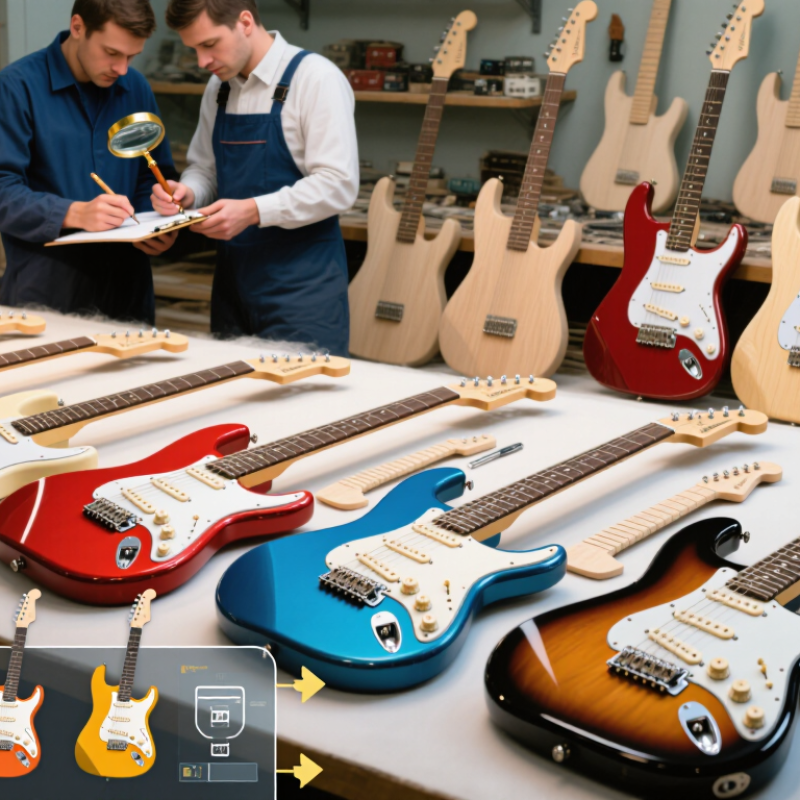
China’s electric-guitar industry serves buyers through both OEM and ODM arrangements. With OEM production, buyers usually provide drawings, specifications, and branding requirements. ODM suppliers may offer existing body shapes, hardware options, and finishes for adaptation. The distinction matters. A familiar-looking sample may still differ in neck profile, fretwork, or pickup output. Request a production sample, not only polished catalog photos.
Export orders often involve detailed choices: wood species, scale length, bridge type, finish, packaging, and carton protection. Ask how each specification is checked during production. A simple inspection sheet can record neck relief, action, tuning stability, and finish flaws. Small checks help. They do not eliminate variation. Buyers should also confirm lead times, spare-part availability, shipping terms, and the documents required for their destination market. Export schedules can shift when materials or shipping capacity change.
OEM and ODM sourcing can make product development more flexible, but customization needs clear limits. Too many options may complicate quality control and delay approval. One point is easy to miss: a color approved under factory lighting can look different in daylight. Request finish samples in consistent lighting. Specs can drift. Keep signed samples and written tolerances for key features, then compare them with goods before shipment.
| Buyer Dimension | Industry Overview | What Buyers Should Check |
|---|---|---|
| OEM model | The buyer supplies the product design or specifications, while the manufacturer produces the instruments to the agreed requirements. | Confirm design ownership, approved drawings, bill of materials, sample sign-off, change-control procedures, and responsibility for tooling. |
| ODM model | The manufacturer offers an existing design or product platform that can be adapted for a buyer’s market or sales channel. | Ask which features can be changed, whether the design is exclusive, and who owns any buyer-funded molds, fixtures, or artwork. |
| Customization | Common customization areas include body shape, finish, hardware, pickups, electronics, neck profile, fretboard, and packaging. | Request a written specification sheet. Confirm that materials, colors, component models, and tolerances match the approved sample. |
| Product range | Manufacturers may produce solid-body, semi-hollow, and hollow-body electric guitars, as well as different neck and pickup configurations. | Assess experience with the specific construction type. A supplier’s capability in one guitar category does not automatically establish capability in another. |
| Materials and components | Wood species, hardware, pickups, and electronics vary by design, specification, availability, and target price point. | Specify the exact material or approved alternatives. Check applicable import rules for wood species and request component documentation where needed. |
| Quality control | Inspection can cover incoming materials, in-process assembly, and finished-guitar checks; the inspection plan is agreed between buyer and supplier. | Define measurable acceptance criteria for setup, tuning stability, fret condition, finish, electronics, and packaging before production begins. |
| Samples and production | Pre-production samples help buyers evaluate the specification before authorizing a production run. Minimum order quantities and lead times depend on the supplier and order details. | Obtain written sample, order-quantity, and schedule terms. Allow time for revisions, component sourcing, production, inspection, and freight. |
| Export logistics | Export orders may be shipped by sea or air, depending on shipment size, delivery schedule, destination, and cost considerations. | Agree on the Incoterm, export documents, carton specifications, cargo insurance responsibilities, and who handles destination-country duties and taxes. |
| Export-market requirements | Product labeling, packaging, chemical restrictions, and wood-related requirements can differ by destination and product configuration. | Identify the destination-market rules before placing an order. Request relevant test reports and material declarations rather than assuming requirements are universal. |
| Industry direction | OEM and ODM sourcing allows buyers to choose between greater design control and using an existing product platform; customization and supplier coordination remain central to both models. | Compare suppliers using samples, documented specifications, production controls, export experience, communication, and total landed cost—not price alone. |
Buyer note: The table describes general sourcing practices, not a ranking or a guarantee about any individual factory. Capabilities, order terms, compliance documentation, and delivery schedules should be verified directly with each prospective supplier.
With OEM, buyers provide drawings, specifications, and branding requirements. ODM suppliers adapt existing shapes, hardware, and finishes. Request a production sample.
Check neck profile, fretwork, pickup output, tuning stability, and finish. Compare the sample with written specifications. Photos are not enough.
A 24.75-inch scale may feel softer under the fingers. A 25.5-inch scale often feels firmer and may suit lower tunings. Compare matching strings and tuning.
No. Access also depends on the neck joint and cutaway. Check fret ends and intonation across the neck. Two extra frets do not guarantee comfort.
Set measurable checks for neck relief, action, fret ends, tuning stability, finish, and packaging. Request inspection records or photos during production. Small checks help.
Review finish samples under consistent lighting. Factory lights can make a color look different from daylight. Keep an approved sample for comparison.
Ask whether MOQ applies per model, finish, or configuration. Put setup costs and production milestones in writing. Add time for delays. Schedules can shift.
Check that any quality certificate is current and covers the manufacturing site. For regulated wood species, request the botanical name and sourcing documents. Confirm destination requirements with qualified authorities. A supplier’s assurance alone is not enough.
China’s electric-guitar industry serves buyers through both OEM and ODM production. Factories may manufacture instruments to a buyer’s specifications or help develop a product range for export markets. When comparing suppliers, consider their factory location, production capabilities, and available product lines, as well as their experience serving international customers.
Consistent quality depends on careful wood selection and moisture control, often targeting 6–8%, alongside CNC machining and skilled assembly. Buyers can compare common specifications such as 24.75-inch and 25.5-inch scale lengths and 22- or 24-fret necks. Before placing an order, confirm quality-control procedures, ISO 9001 certification where applicable, minimum order quantities, inspection arrangements, and realistic lead times. Also discuss wood sourcing and required CITES documentation with the supplier to ensure materials are properly documented and shipments meet applicable rules.