0%

Choosing a Folk Guitar is not just a search for a pleasing sound. It is a decision about music, comfort, and where the instrument will be played. A deep-bodied dreadnought can deliver strong volume for group singing, while a compact parlor guitar feels easier to carry on a train or hold in a crowded room. Nylon strings offer a softer touch; steel strings bring a brighter edge. Small details matter.

Guitar master Andrés Segovia captured the instrument’s range with the words, “The guitar is a small orchestra. It is polyphonic. Every string is a different color, a different voice.” His observation helps explain why seemingly similar guitars can feel so different beneath the fingers. Body shape, scale length, bracing, and setup all influence response. Yet specifications alone cannot tell you whether a guitar will suit your hands or your songs.

This guide examines ten types of folk guitar for global buyers, from familiar steel-string designs to distinctive regional forms. It considers sound, construction, portability, and practical buying questions, without pretending one model fits every player. No ranking is universal. A guitar that shines in a quiet studio may struggle around a campfire, and a bargain may need a professional setup. That trade-off matters. Use the comparisons as a starting point, then listen closely, check the details, and leave room for personal preference.
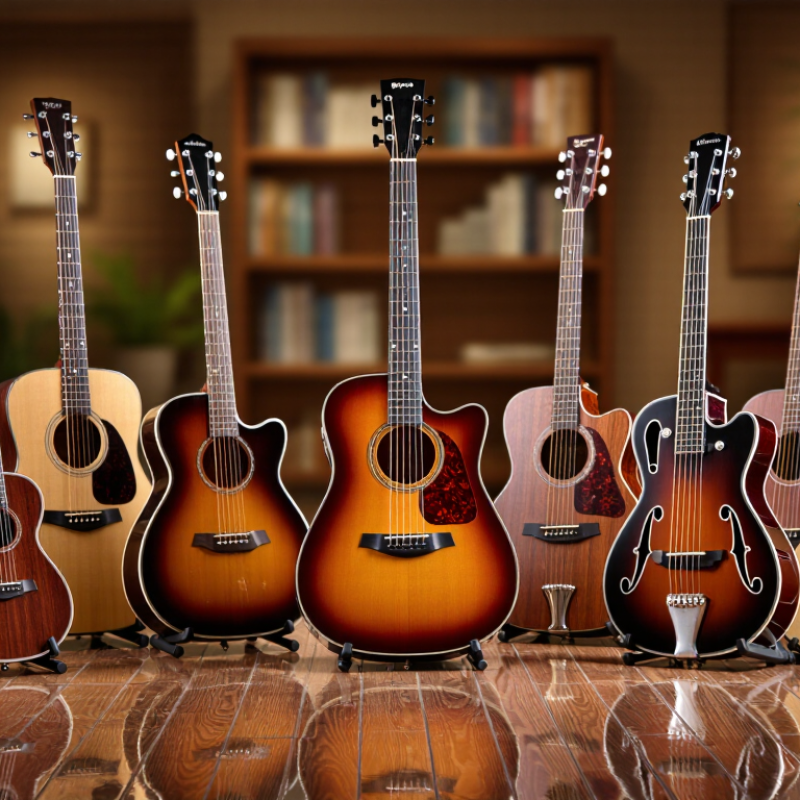
Top 10 Types of Folk Guitar for Global Buyers

How Folk Guitars Differ Across Musical Traditions

How Folk Guitars Differ Across Musical Traditions

A folk guitar’s sound starts with its strings, body, and musical role. Steel-string flat-tops suit bright, projecting strums in many North American folk styles. Nylon-string guitars offer a softer attack, often valued in Spanish and Latin American traditions. In the Andes, the small charango typically has five paired courses and a sharp, ringing tone. Brazil’s viola caipira commonly uses paired strings for lively regional patterns. Russia’s seven-string guitar supports a different chord vocabulary and accompaniment style. Small details matter.

These instruments reflect more than sound: tuning, playing posture, local materials, and ensemble roles shape each tradition. UNCTAD’s Creative Economy Outlook 2022 reported that global creative-goods exports reached about US$524 billion in 2020. That figure is not guitar-market data, but it shows the scale of cross-border cultural exchange. Buyers should treat origin and construction details as essential, not decorative. There is no perfect ranking. A popular choice may still be wrong for a particular repertoire.

Tips: Match string tension and tuning to the music you play. Check scale length, neck width, and climate-sensitive construction before ordering. Ask for clear specifications; descriptions can be inconsistent, and I would not assume every “folk” guitar follows one standard.

Top 10 Types of Folk Guitar for Global Buyers

How folk guitars differ across musical traditions: typical number of strings

String counts reflect common versions. Instruments such as the tres, viola caipira, and bajo sexto use paired strings, while regional designs and modern versions may vary. String count alone does not determine an instrument’s sound or playing feel.

Key Features Used to Classify Folk Guitars

Top 10 Types of Folk Guitar for Global Buyers

Key Features Used to Classify Folk Guitars

Folk guitars are often classified by body shape, string type, scale length, and construction. A compact parlor body feels manageable on a crowded train or in a small room. Larger dreadnought-style bodies usually move more air, while slimmer shapes can feel easier to hold. Steel strings give a bright, firm attack; nylon strings tend to feel softer under the fingers. Small details matter.

Scale length affects string tension and reach, but it is only one part of playability. Neck width, fingerboard radius, and action can change how comfortable chords feel. Wood choices and internal bracing also influence resonance and weight. Still, wood alone does not predict tone reliably; the player’s touch, setup, and room all matter. Categories overlap, and a guitar may not fit one label neatly.

Tips: Check the instrument in person when possible. Play open chords, a quiet melody, and a few hard strums. Notice whether the neck feels comfortable and whether notes buzz. For international buyers, compare measurements and materials carefully; product descriptions can use regional terms differently. A little uncertainty is normal.

Top 10 Types of Folk Guitar for Global Buyers - Key Features Used to Classify Folk Guitars

Guitar Type Classification Basis Key Features Typical Sound and Use Buyer Considerations
Dreadnought Large body shape Broad lower bout, relatively deep body, usually six steel strings. Strong bass and volume; well suited to strumming and group playing. Compare body depth and neck feel; its size may be less comfortable for smaller players.
Jumbo Extra-large body shape Large lower bout and substantial air volume; commonly built for steel strings. Full, loud sound with pronounced bass, often favored for strumming. Check overall dimensions and comfort when seated or standing.
Auditorium / Orchestra Model (OM) Medium body shape and waist profile Typically narrower than a dreadnought, with a more defined waist; OM designs often use a longer scale than smaller concert models. Balanced response across bass, midrange, and treble; versatile for fingerstyle and strumming. Check the exact body dimensions and scale length, as naming varies among makers.
Concert Compact body size Smaller body than a dreadnought; usually a six-string steel-string design. Clear, focused tone with less bass emphasis; suitable for fingerpicking and lighter strumming. A practical option for players seeking a smaller body, though it may offer less low-end volume.
Grand Concert Compact-to-medium body size Generally larger than a concert body and smaller than an auditorium; exact dimensions vary by maker. Controlled, articulate response suited to fingerstyle, recording, and moderate strumming. Compare measurements directly because body-size labels are not fully standardized.
Parlor Small, narrow body shape Compact body and often a shorter scale; available in steel-string and other configurations. Focused, intimate sound that can suit blues, folk, and home playing. Check string tension, neck width, and low-frequency response before choosing a compact model.
12-String Acoustic String configuration Six paired courses: four pairs are commonly octave-tuned, while the two highest pairs are typically tuned in unison. Bright, naturally doubled sound with a chorus-like quality; effective for full strumming textures. The paired strings require more tuning attention and can feel firmer under the fingers than a six-string guitar.
Nylon-String Folk / Crossover String material and neck design Nylon strings; crossover versions may have a narrower neck or radiused fingerboard compared with traditional classical designs. Warm, softer attack; suitable for fingerstyle, folk arrangements, and players who prefer lower string tension. Confirm nut width and neck profile; traditional classical and crossover models can feel quite different.
Travel / Compact Acoustic Reduced body size and portability Smaller body, shortened scale, or both; available with different string types and body designs. Convenient for travel and practice; projection and bass response are often more limited than on full-size instruments. Check total length, scale length, tuning stability, and included case dimensions.
Cutaway Acoustic Upper-bout body contour; a design option rather than a separate body size A portion of the upper bout is removed to improve access to higher frets; available on several body shapes. Useful for playing higher-register passages; sound depends mainly on the guitar’s body, strings, and construction. Choose based on high-fret access needs; compare acoustic and pickup-equipped versions if amplification is required.

Note: Folk guitar is a broad market term rather than a single standardized instrument category. Body-shape names and dimensions can vary, and some classifications overlap.

Ten Folk Guitar Types from Around the World

Ten Folk Guitar Types from Around the World

Folk guitars reflect local music, materials, and playing habits. The Spanish classical guitar uses nylon strings for a rounded tone, while the flamenco guitar often has a lighter build and sharper attack. Steel-string flat-tops suit strummed songs; compact parlor guitars feel comfortable in small rooms. Twelve-string guitars add a bright, doubled shimmer. The Global Musical Instruments Market report by Grand View Research estimated the wider instrument market at USD 17.1 billion in 2023, with projected growth through 2030. That figure covers more than guitars, so it should not be read as folk-guitar sales. Still, it signals a broad market for varied instruments.

Regional forms widen the picture. Portugal’s guitarra has paired strings and a distinct, ringing sound. Brazil’s viola caipira is commonly tuned in five courses, while Mexico’s bajo sexto provides bass support in regional ensembles. The Andean charango is a small, bright-sounding guitar-family instrument, and Russia’s seven-string guitar has a long history in folk song. These labels are not always tidy. Some instruments are related to guitars rather than guitars in the narrow sense. For buyers, inspect scale length, string spacing, tuning, and repair access before choosing. A beautiful sound is not enough. Local playing styles may also require techniques that take time to learn.

How Design and Materials Shape Sound and Playability

Folk guitars vary in body shape, scale length, and construction, and these choices affect both tone and comfort. A dreadnought’s broad body often gives steel strings a firm low end and plenty of volume. Concert and parlor guitars feel more compact, with a balanced sound that suits lighter strumming or fingerpicking. A twelve-string adds shimmering detail, but its doubled strings may feel demanding under the fingers. Small details matter.

Tips: Compare body size while seated, not only on a shop wall. Check that your fretting hand reaches the first few frets comfortably. Solid spruce tops often respond clearly to changing touch; cedar can sound warmer. Laminate construction may be less sensitive to climate swings, though it can respond differently to a player’s touch.

Neck width, string height, and scale length shape playability as much as the body does. A shorter scale can make strings feel easier to press, while a wider nut may give fingers more room for precise picking. Steel strings generally need a suitable setup and can feel firmer than nylon. Ask a qualified technician to check string height and neck relief before buying. Materials are only part of the story: a well-adjusted, modest guitar may be more enjoyable than a costly one that feels awkward. Even careful comparisons leave some guesswork; your hands and ears may disagree with the specification sheet.

How Global Buyers Choose the Right Folk Guitar

Global buyers should start with the player, not the catalogue. A flat-top steel-string folk guitar suits bright strumming, while a nylon-string model feels softer under the fingers. Smaller bodies can be easier to hold during travel or long practice sessions. Try the instrument seated, standing, and with a strap. Comfort matters.

Sound depends on more than body shape. Wood, bracing, string type, and setup all affect response, but labels alone cannot predict the result. Listen for clear notes across the neck, balanced bass, and chords that do not buzz. A useful test is to play the same simple progression on several guitars. Small differences become obvious. If buying remotely, ask for a recorded sample and close photographs of the bridge, neck, and finish.

Also check scale length, nut width, case fit, and setup options before ordering. Buyers in dry or humid regions should ask how the guitar is packed and protected during shipment. Confirm what inspection or adjustment is available after delivery. A low price can hide a poor setup, yet a high price does not guarantee the right feel. I would not choose from appearance alone; even a beautiful guitar may feel awkward after twenty minutes.

FAQS

What features help classify folk guitars?

Body shape, string type, scale length, and construction are common clues. Categories can overlap.

How do steel and nylon strings feel different?

Steel strings usually feel firmer and sound bright. Nylon strings feel softer under the fingers. Small differences matter.

Is a larger guitar always louder?

Larger bodies often move more air, but volume also depends on the player and room. Not always.

What should I check when trying a guitar?

Play open chords, a quiet melody, and a few firm strums. Check for buzzing notes and a comfortable neck.

Are parlor guitars suitable for small spaces?

Their compact bodies can feel manageable in a small room or on a crowded train. They may not suit everyone.

What makes a twelve-string guitar sound different?

Its doubled strings create a bright, shimmering sound. The wider string layout may take adjustment.

Are regional guitar-family instruments all standard guitars?

No. The charango and other regional forms may be related to guitars without fitting the narrow definition.

What details matter when buying an unfamiliar regional instrument?

Compare scale length, string spacing, tuning, and repair access. Product descriptions may use regional terms differently. I would check twice.

Conclusion

Folk Guitar traditions around the world reflect the music, materials, and playing styles of the communities that shaped them. Although these instruments share a connection to familiar guitar forms, they vary in body shape, string configuration, tuning, construction, and performance technique. Comparing these features helps explain how different folk guitars produce distinctive sounds and serve different musical roles.

For global buyers, choosing the right instrument means considering more than appearance. Wood and other construction materials can influence tone, weight, and durability, while scale length, neck shape, and string setup affect comfort and playability. Understanding ten folk guitar types from diverse regions can help buyers match an instrument to their musical interests, skill level, desired sound, and practical needs. This overview offers a starting point for exploring the variety and character of folk guitars.

Averelle

Averelle

Averelle is a professional marketing specialist with a strong understanding of the company’s products, customer needs, and the practical considerations that shape purchasing decisions. Through regular articles on the company website, Averelle turns product knowledge into clear, useful guidance,......