
 English
 Español
 Deutsch
 Français
 Português
 Italiano
 Русский
 日本語
 한국어
 العربية English Español Deutsch Français Português Italiano Русский 日本語 한국어 العربية
Explore our factory-tested acoustic models and gig bags manufactured to international quality standards for global distributors and private labels.
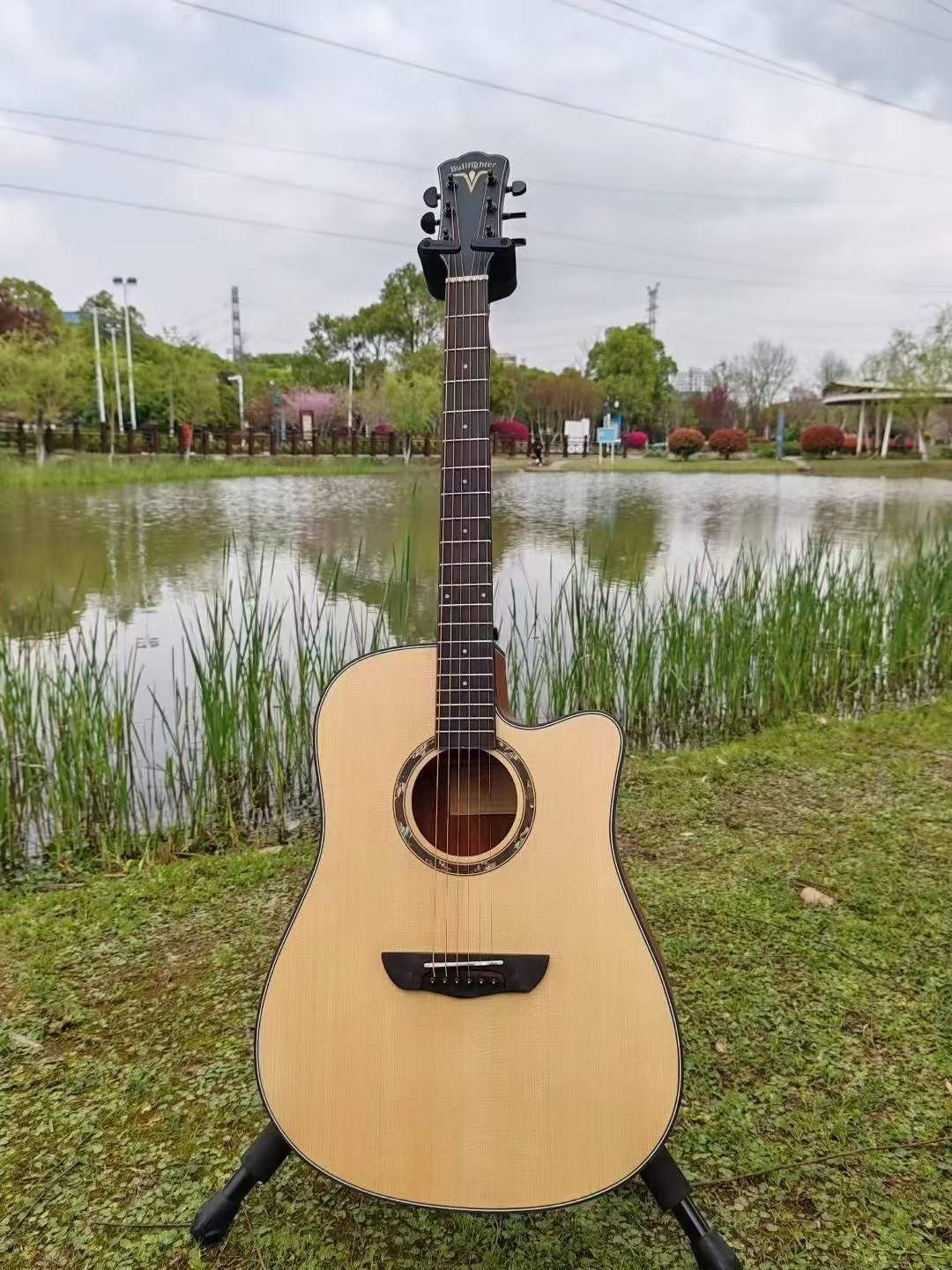
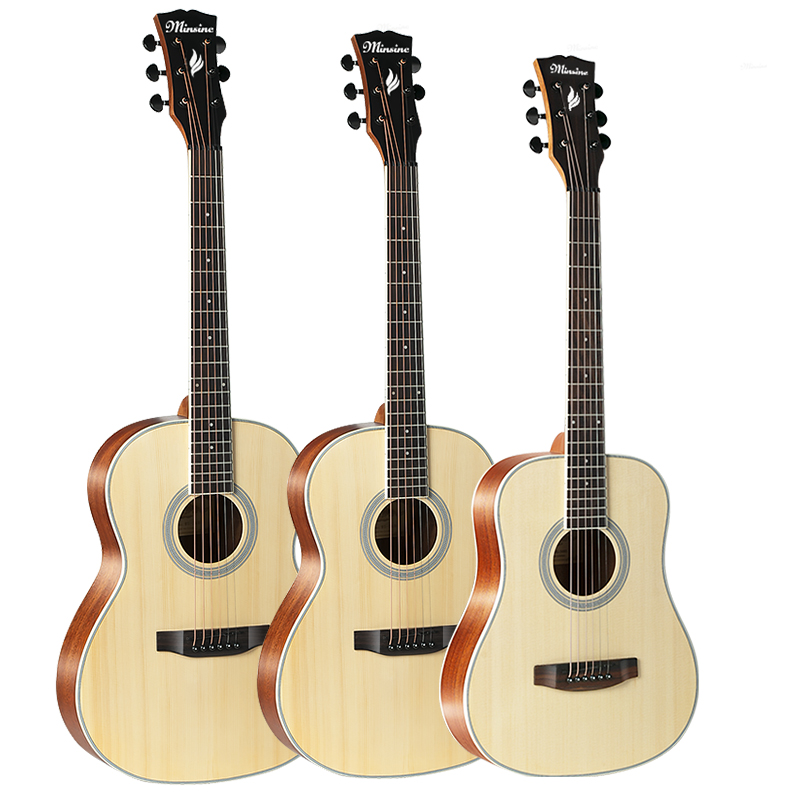
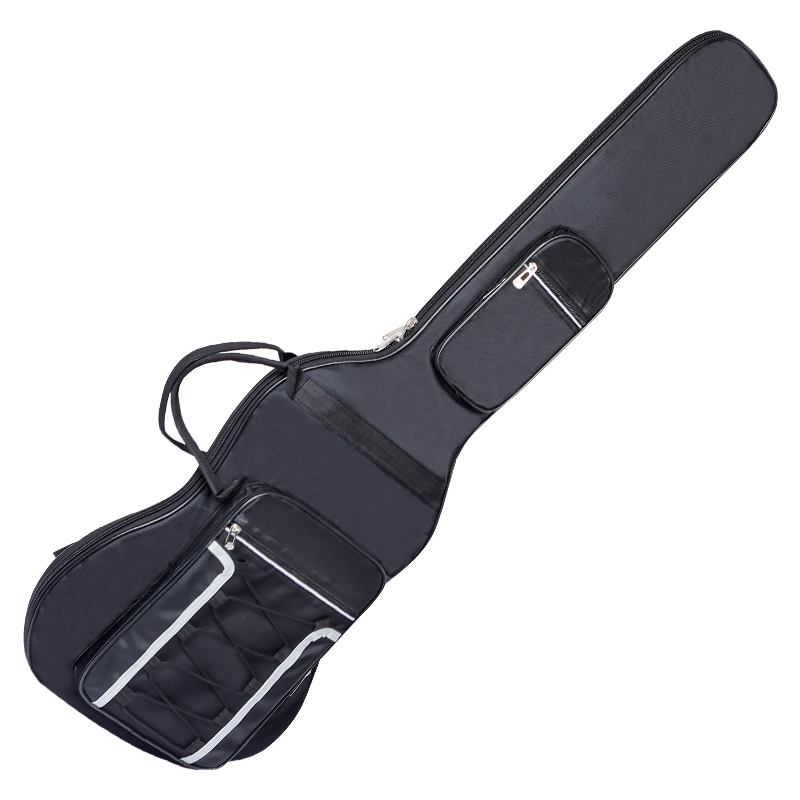

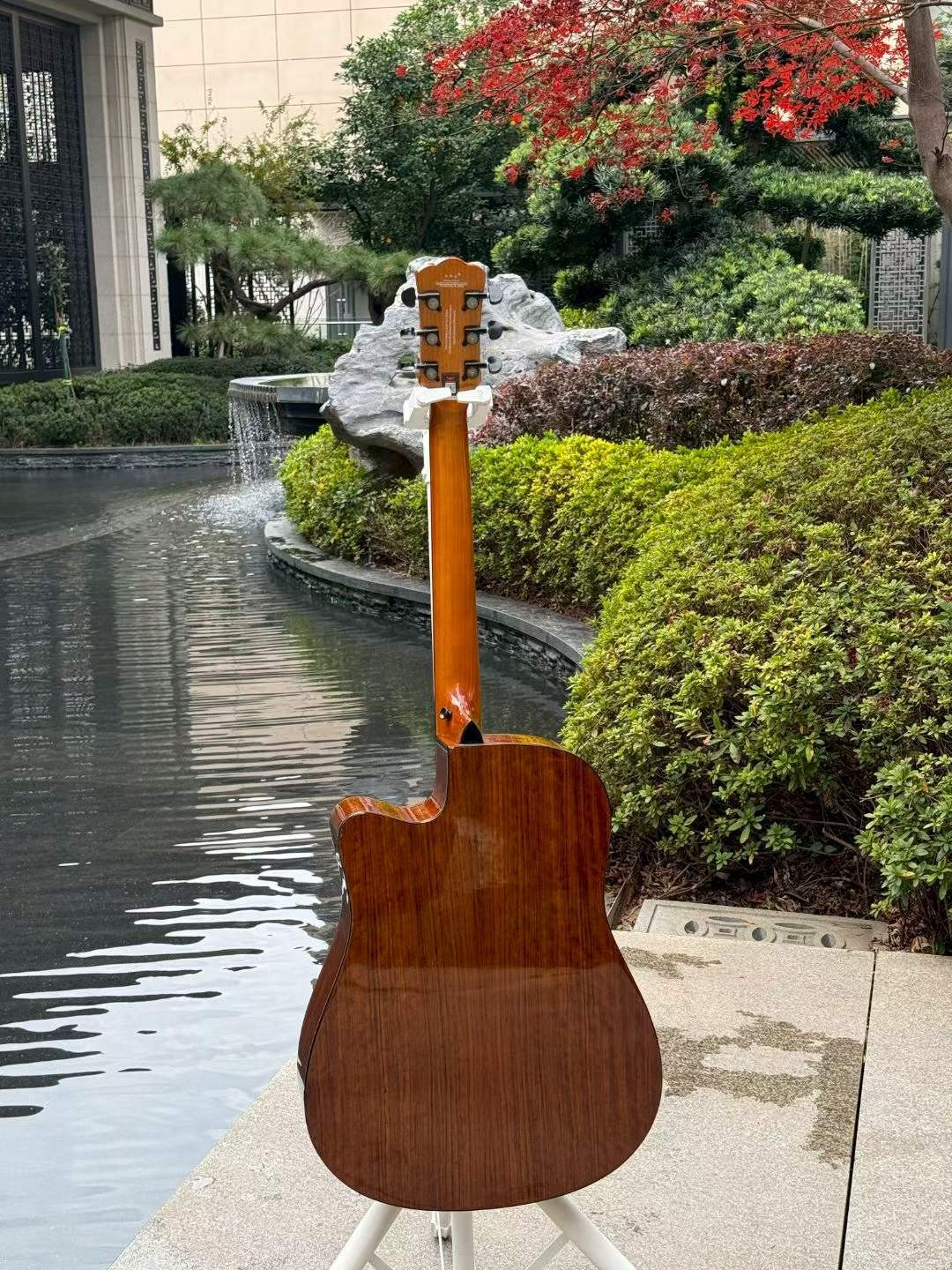
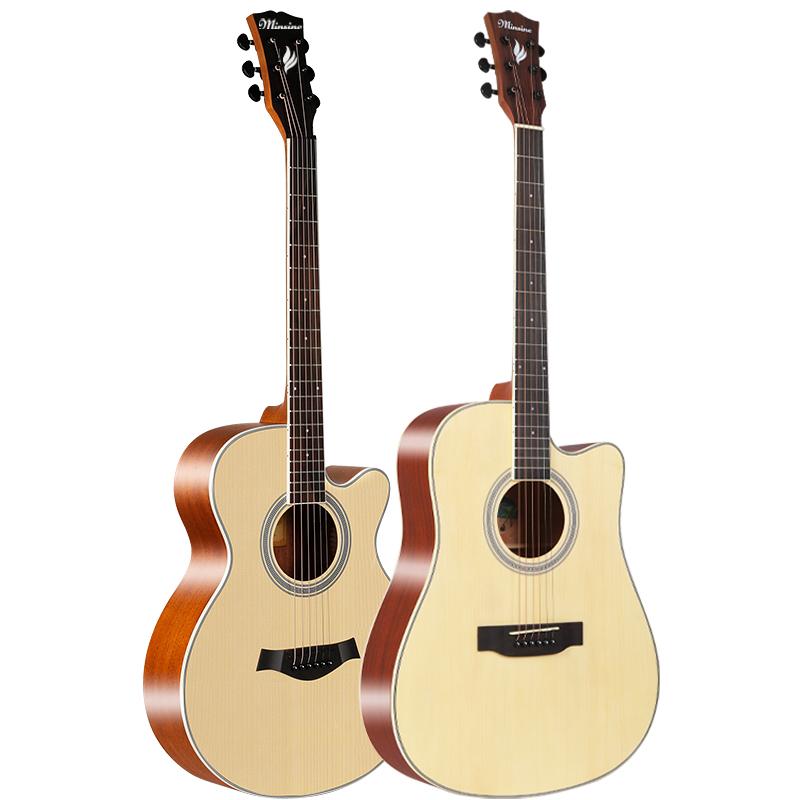
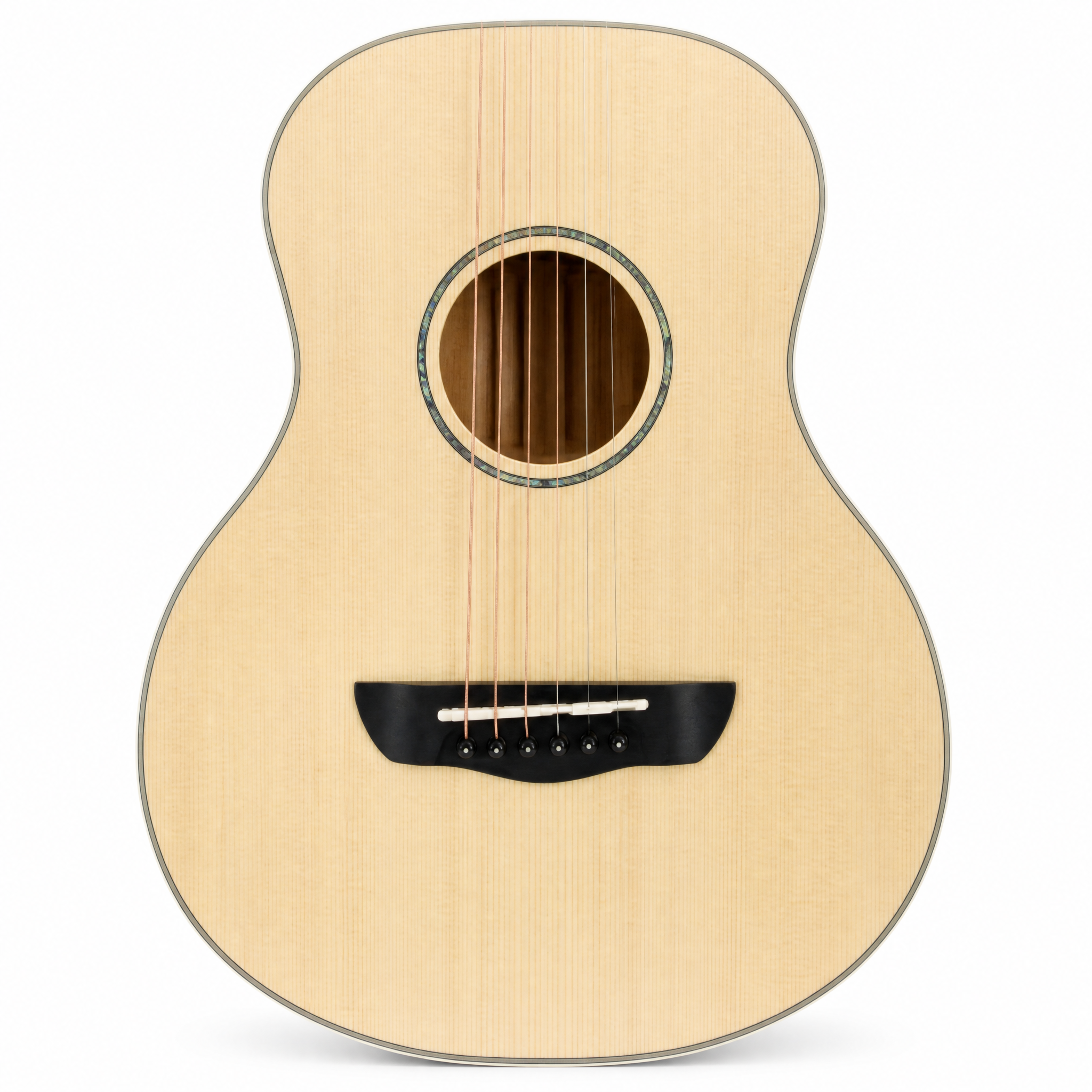
Changsha YBUL Instrument Co., Ltd. operates state-of-the-art facilities designed to meet global supply chain demand for high-grade spruce top acoustic instruments.
In acoustic guitar manufacturing, the soundboard (top) contributes up to 70% to 80% of the instrument's overall sound projection, overtone spectrum, and velocity of sound. For global B2B buyers, sourcing from China's best spruce top guitar factories requires a granular understanding of spruce species, acoustic resonance physics, and wood stabilization protocols.
Spruce (genus Picea) is globally recognized as the gold standard for acoustic instrument soundboards due to its extraordinary strength-to-weight ratio and high Young’s modulus ($E$). These characteristics allow a thin spruce soundboard (typically 2.7mm to 3.2mm in finished thickness) to withstand string tension exceeding 70 kg (150 lbs) while vibrating freely across a wide dynamic spectrum.
Extremely dense with high longitudinal stiffness. Delivers a bright, punchy tone with high headroom, making it ideal for heavy strumming and dreadnought acoustic bodies.
Lighter and softer than Sitka, yielding a richer overtone profile and faster response to light touch. Highly prized for fingerstyle instruments and premium solid-top models like the Bullfighter D-30S series.
Offers complex harmonics, brilliant bell-like highs, and excellent velocity of sound. Chosen for classical and boutique custom OEM lines requiring high tonal clarity.
The speed at which sound waves travel through soundboard tonewood is governed by the sound velocity formula:
$$c = \sqrt{\frac{E}{\rho}}$$
Where $c$ represents acoustic velocity, $E$ is the longitudinal modulus of elasticity, and $\rho$ is the density of the spruce timber. Premium Chinese manufacturing facilities select quarter-sawn spruce tops with perfectly vertical grain orientation (90° relative to the soundboard surface) and high grain count (over 12–16 rings per inch). This minimizes internal damping and maximizes sound velocity ($c \approx 5,000\text{ m/s}$), ensuring maximum volume, sustain, and projection.
| Wood Grade | Grain Orientation | Moisture Content (EMC) | Acoustic Character | Recommended Market Tier |
|---|---|---|---|---|
| Master / AAA Solid | 100% Quarter-sawn, >16 rings/inch, zero runout | 6% – 8% (High-Frequency Kiln Dried) | Exceptional dynamic headroom, complex harmonics, bell-like sustain | Professional Stage / High-End Boutique Brand |
| AA Solid Spruce | Quarter-sawn, 10–15 rings/inch, tight straight grain | 7% – 9% (Vacuum Seasoned) | Clear fundamental response, fast transient attack, strong balance | Mid-to-High Retail Range / Intermediate Series |
| A Solid Spruce | Straight grain, slight color variation allowed | 8% – 10% (Kiln Controlled) | Warm tone, punchy mid-range, structural stability | Mass Market Entry-Solid / Student Practice |
| Select Spruce Laminate | Cross-grained multi-ply core with spruce veneer | 8% – 10% (Standard Drying) | High climate resilience, crack-resistant, consistent output | Commercial OEM Volume Orders / Travel Guitars |
China's musical instrument industry has undergone a massive technological evolution over the past decade. Top-tier guitar manufacturers in Changsha, Hunan, have combined traditional luthiery with automated precision engineering to eliminate quality variance in mass production.
Traditional air-drying requires up to 3 years to reach moisture equilibrium, creating inventory bottlenecks. Leading Chinese factories utilize High-Frequency Vacuum Dryers that extract unbound bound water from timber cells at lower temperatures without thermal degradation. This process locks equilibrium moisture content (EMC) to 6%–8%, preventing bridge lifting, top sinkage, and body cracking under extreme international export climates.
Modern factories replace manual hand-carving of X-bracing with multi-axis CNC routers controlled by laser optical measurement. The depth, parabolic curve, and scalloping of Sitka spruce bracing are milled to tolerances within ±0.05mm. This ensures exact modal frequency alignment across thousands of production units without compromising soundboard structural integrity.
A critical engineering trend in top Chinese acoustic guitar manufacturing is the shift from heavy polyurethane (PU) finishes toward Ultra-Thin Ultraviolet (UV) Cured Polymer Finishes. Traditional spray coatings can exceed 0.5mm in thickness, severely dampening soundboard vibration and restricting high-frequency resonance.
Modern UV curing lines allow factories to apply ultra-hard protective coatings as thin as 0.15mm to 0.20mm. UV coating cures instantly under intense ultra-violet wavelengths, resulting in zero volatile organic compound (VOC) emissions, zero finish sinking over time, and maximum acoustic transference across the spruce soundboard.
International musical instrument importers, brand owners, and procurement directors face changing global market demands. Successful buyers are adapting their supply chain strategy based on four macro trends in Chinese guitar manufacturing:
Torrefaction bakes spruce soundboards in an oxygen-free oven at 180°C–210°C, artificially aging the wood cellular structure. The resulting tops resist humidity fluctuations and deliver the dry, open tone of a 50-year-old vintage instrument right out of the box.
Global customs regulations demand 100% legal timber traceability. Responsible Chinese suppliers utilize FSC-certified spruce sources and CITES-compliant fretboard alternatives such as Indonesian Rosewood, Walnut, or high-density Technical Wood.
Retailers no longer want rigid 500-piece MOQs per color SKU. Modern suppliers leverage rapid laser logo etching and flexible assembly lines to offer multi-model combined container shipments with lower minimum order quantities.
As a leading supplier evaluated onsite by SGS Group, Changsha YBUL Instrument Co., Ltd. (operating the renowned Bullfighter and Minsine brands) represents the top tier of Chinese musical instrument production. Located in Changsha, Hunan, our organization combines dual manufacturing plants with a dedicated export services infrastructure.
Operating over 16,483 square meters of standardized industrial workshops, our factory houses automated wood processing, CNC profiling, dust-free paint spray booths, and climate-controlled drying rooms. Our monthly capacity exceeds 15,000 acoustic and electric guitars along with 1,000 sets of amplifiers and electronic drums.
Every instrument produced in our workshop passes strict QC inspections: raw timber moisture testing, structural joint stress testing, digital fret leveling, pitch calibration with electronic beat calibrators, and 360-degree cosmetic finish inspection prior to drop-tested export packaging.
We work directly with international brands, wholesale distributors, and music retail chains to create private-label product lines. Our OEM customization capabilities include:
When selecting a Chinese guitar manufacturer for spruce top instruments, procurement managers must evaluate suppliers beyond low unit pricing. Use this checklist to verify supplier maturity during factory audits:
| Audit Parameter | Standard Requirement | Risk Factors if Ignored |
|---|---|---|
| Wood Storage Control | Controlled kiln seasoning; constant indoor relative humidity (45%–55% RH). | High risk of top warping, fret sprout, and body seams splitting after shipping. |
| Neck Joint Precision | Dovetail joint or CNC bolt-on with zero gap tolerance (<0.05mm). | Poor energy transfer, dead notes, unstable string action over time. |
| Fret Dressing & Leveling | Crown beveling, automated fret wire pressing, hand-polished fret ends. | Fret buzzing, sharp edges damaging player hands, expensive local dealer setup costs. |
| Glue Line Structural Test | High-strength aliphatic resin / PUR glue tested under hydraulic press tension. | Bridge popping off soundboard, internal soundboard bracing detachment. |
| Packaging Integrity | Double-wall corrugated cartons (5-ply), EPE foam padding, humidity desiccant packs. | Freight shipping impact damage, finish clouding due to high sea container humidity. |
Request our latest 2025 product catalog, OEM pricing matrix, and factory audit documentation. Our export sales team replies within 12 hours.