 English
 Español
 Deutsch
 Français
 Português
 Italiano
 Русский
 日本語
 한국어
 العربية English Español Deutsch Français Português Italiano Русский 日本語 한국어 العربية
Direct from Changsha YBUL Instrument Co., Ltd. — SGS Onsite Assessed Production Facility
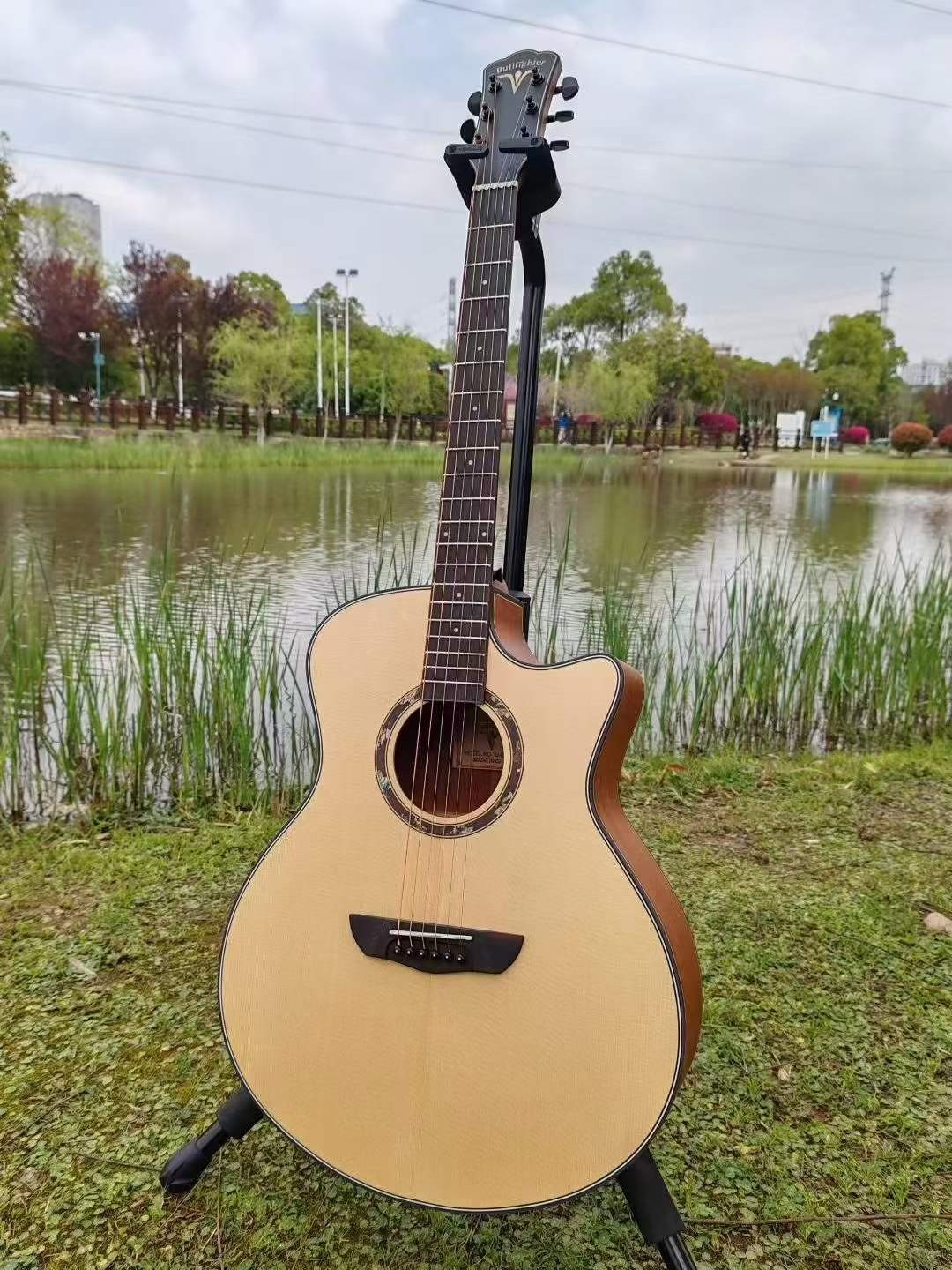
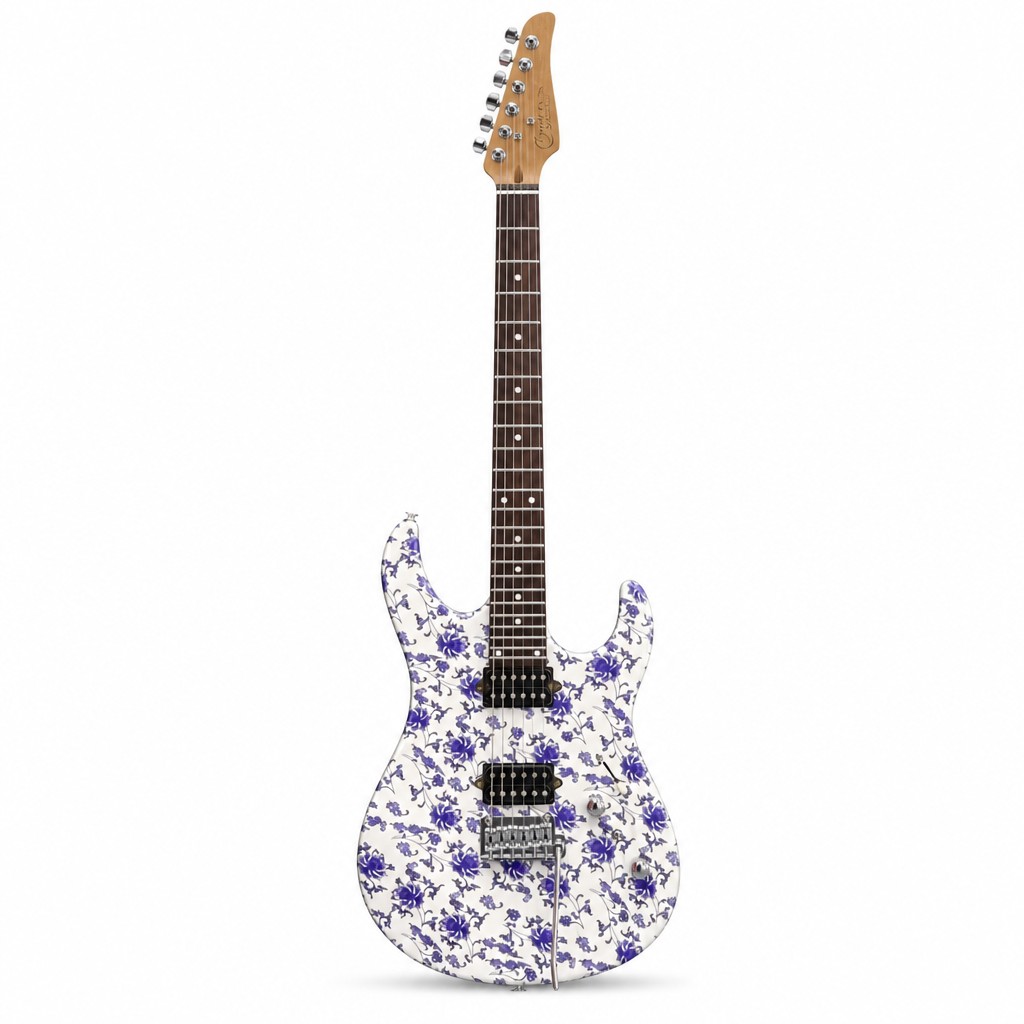
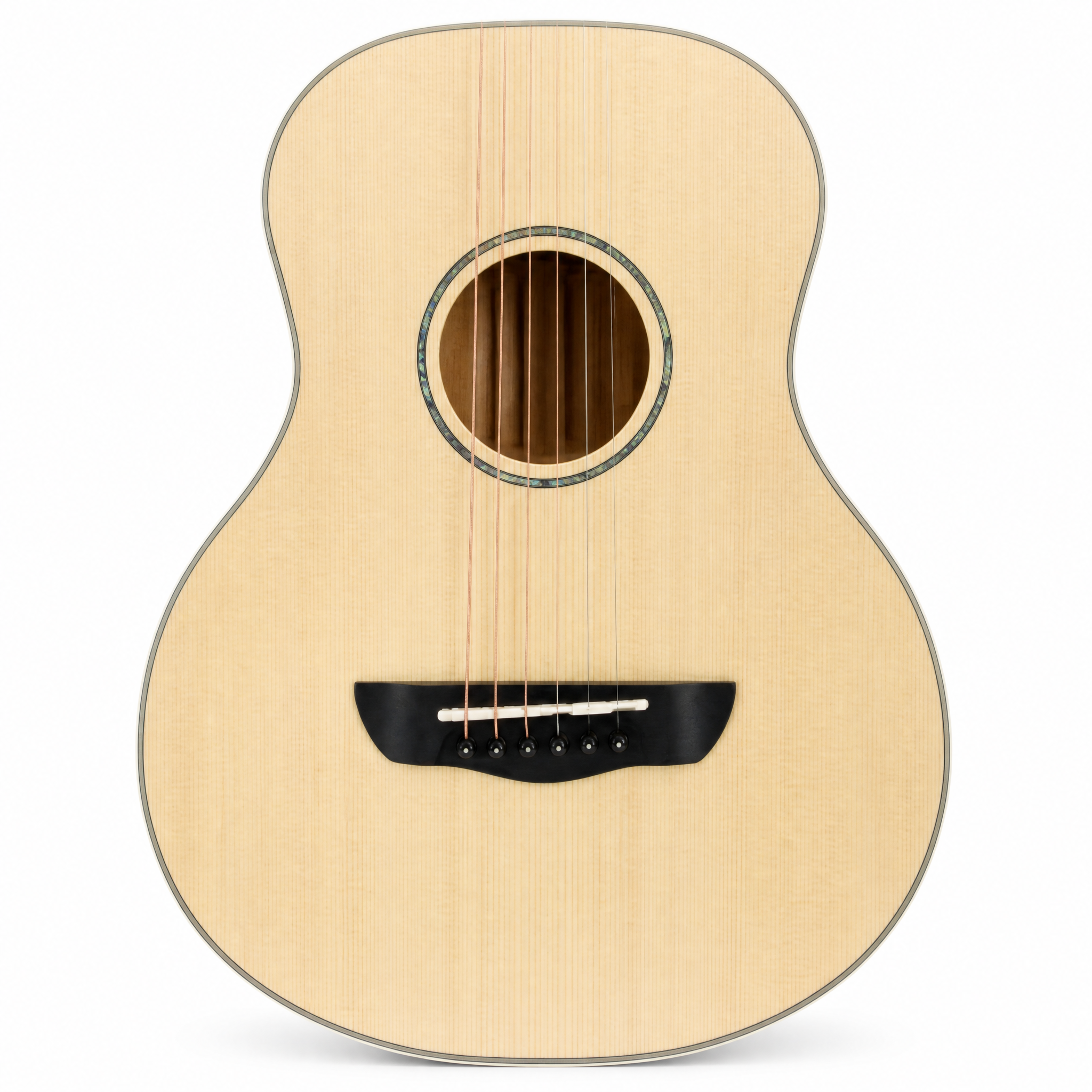
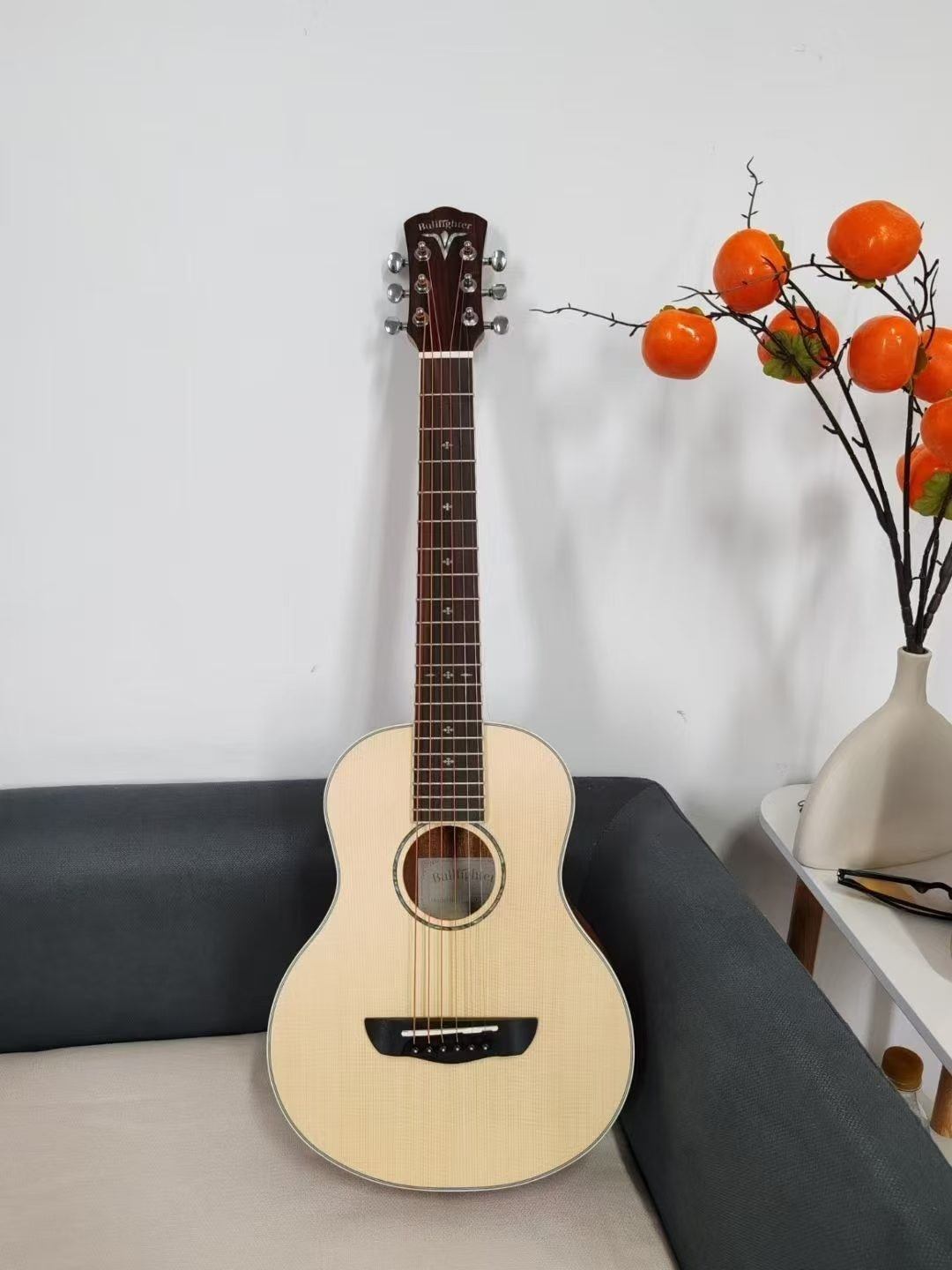
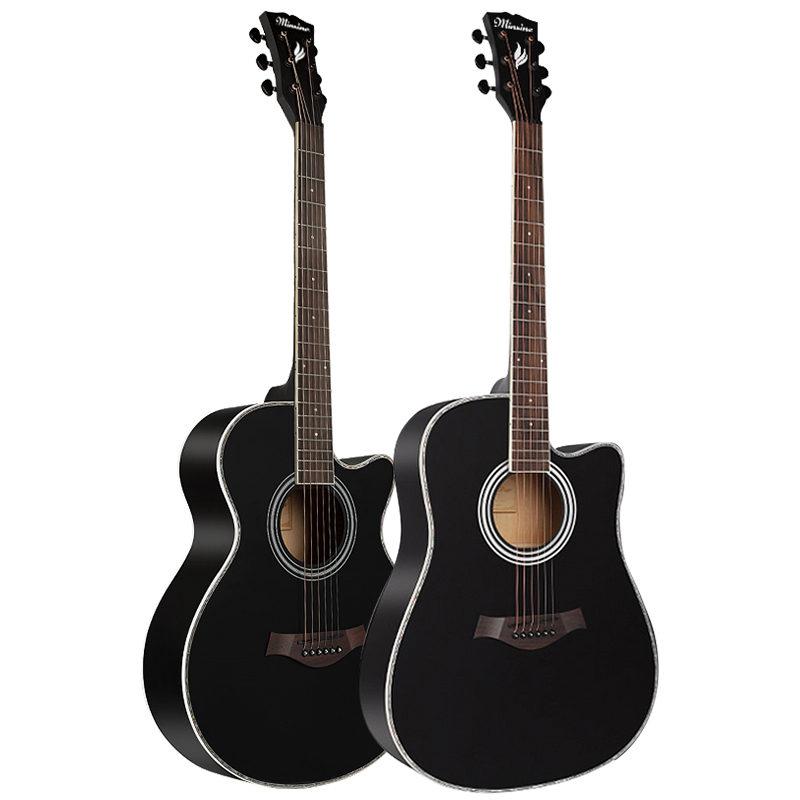
An authoritative operational guide for global musical instrument brands, OEM distributors, and supply chain directors seeking information gain in acoustic bass production.
Navigating Helmholtz resonance ($f_H$), soundboard flexural rigidity, and air volumetric displacement required for unamplified low-end projection.
Evaluating 30" Short Scale vs 32" Medium vs 34" Long Scale string tension dynamics and fretboard ergonomics for export markets.
Integrating under-saddle piezo elements with internal boundary microphones and active EQ to prevent feedback while retaining acoustic body bloom.
Standard 6-string acoustic guitars operate predominantly in the mid-range spectrum (82 Hz to 1000+ Hz). Conversely, an acoustic bass guitar must deliver fundamental energy at 41.2 Hz (E1) and 55 Hz (A1). To achieve meaningful sound pressure levels (SPL) without electronic amplification, acoustic bass engineering demands precise soundboard thicknessing and modified bracing topologies.
At Changsha YBUL Instrument Co., Ltd., our R&D lutherie team utilizes high-frequency vacuum-seasoned solid Engelmann Spruce and Sitka Spruce tops thinned specifically to 2.8mm – 3.1mm. Coupled with custom parabolic parabolic X-bracing and carbon-fiber reinforced bridge plates, our soundboards achieve optimum flexural rigidity ($D = \frac{E h^3}{12(1-\nu^2)}$), preventing top-belly distortion under heavy bronze-wound string loads while allowing the perimeter to flex freely for maximum bass resonance.
Because acoustic bass strings impose significant static tensile pull (exceeding 850 Newtons across a 4-string setup), traditional dovetail neck joints frequently suffer joint creep over time, leading to elevated string action and unplayable neck relief. YBUL solves this through a proprietary double-anchored mortise-and-tenon neck joint reinforced with dual-action heavy-duty steel truss rods and twin carbon-fiber stabilizer rods embedded along the neck shaft.
| Structural Parameter | Standard Market Entry-Level | YBUL Factory OEM Professional Spec | B2B Sourcing Advantage |
|---|---|---|---|
| Neck Reinforcement | Single Truss Rod only | Dual-Action Truss Rod + Twin Carbon Fiber Rods | Eliminates warranty returns due to neck twisting |
| Wood Moisture Equilibrium | 8% - 12% air-dried (Variable) | 6% - 8% High-Frequency Vacuum Kiln Cured | Prevents cracking in dry export markets (US/EU) |
| Soundboard Bracing | Standard Parallel Scalloped | Parabolic Asymmetric X-Bracing + Soundport Vents | Enhanced low-end acoustic response & feedback resistance |
| Onboard Electronics | Basic Single Piezo EQ | Hybrid Piezo + Mic Transducer + Notch Filter | Stage-ready tone for live performance & studio recording |
Strategic buying patterns, material shifts, and commercial opportunities shaping international musical instrument supply chains for 2025–2030.
Global importers are shifting toward torrefied (baked) soundboards and necks. Thermally aging wood at 180°C–220°C breaks down hemicellulose, crystallizing cellulose to mimic 50-year-old vintage acoustic resonance while rendering the wood immune to humidity fluctuations during ocean freight transit.
While 34" scale remains the traditional standard, 30" short-scale acoustic basses are experiencing explosive growth (+38% YoY in search intent). Modern players, multi-instrumentalists, and home studio creators prefer short-scale body geometries due to reduced finger stretch, portable chambered bodies, and warm, thumpy vintage tones.
Strict enforcement of CITES regulations and the U.S. Lacey Act requires complete, transparent chain-of-custody documentation for rosewood, ebony, and mahogany substitutes. Leading brands prioritize OEM partners providing FSC-certified Sapele, African Mahogany, and Tech-Wood fretboard alternatives.
In response to evolving direct-to-consumer (D2C) e-commerce channels and wholesale retail dynamics, guitar brands can no longer rely on off-the-shelf catalog models. Success in saturated markets demands hyper-targeted product segmentation: offering entry-level student acoustic basses with highly durable laminate spruce bodies alongside boutique solid-top models featuring integrated USB-C rechargeable preamps, soundports, and ergonomic bevel cutaways.
By partnering directly with a verified manufacturer like Changsha YBUL Instrument Co., Ltd., brand managers bypass multi-tiered broker markups, securing factory-direct FOB/DDP pricing, custom color matching (including gloss matte sunbursts and satin open-pore finishes), and proprietary headstock carving that establishes true brand equity.
How automation, precision CNC routing, and advanced finishing technologies are elevating consistency and reducing batch-to-batch variance.
Computer-controlled neck contouring and bridge slotting eliminate human error, ensuring action heights remain uniform across thousands of production units.
Automated paint lines apply micron-thin polyurethane and nitrocellulose lacquer coats, preserving natural wood resonance while providing robust scratch resistance.
Advanced moisture extraction reduces wood internal stress, preventing cracking, seam separation, or fingerboard sprout during long-distance shipping.
Individual string balance testing ensures that low-E, A, D, and G strings emit identical output voltage levels to the preamp without volume drops.
Integrated Lutherie Experience, Massive Facilities, and Verified SGS Supply Chain Transparency
Founded in 2015 in Changsha, Hunan, Changsha YBUL Instrument Co., Ltd. operates two state-of-the-art manufacturing plants alongside a 2,500㎡ R&D center. Our operations are fully assessed onsite by SGS Group, guaranteeing authentic factory status rather than intermediary trading markup.
Every instrument passes rigorous quality gates prior to export container loading:
Clear, definitive answers to help procurement directors, brand owners, and wholesale buyers streamline their import orders.
We operate as an integrated manufacturer and exporter. Our enterprise features two physical production facilities spanning 16,483 square meters alongside an R&D sales center in Changsha, Hunan. Our manufacturing premises have been audited and verified onsite by SGS Group.
Our standard MOQ for full OEM private-label production (custom logo, headstock, finish, and electronic EQ) starts at 50 to 100 units per model, depending on wood specifications. For existing showroom designs from our stock catalog, smaller trial sample orders are readily available.
Acoustic basses endure high string tension. We reinforce our necks using a dual-action heavy-duty steel truss rod flanked by two parallel carbon-fiber stabilizer bars. Coupled with high-frequency vacuum kiln wood drying down to 6%-8% moisture content, our necks remain stable across varying climates.
Yes. We offer multiple onboard active preamp options, including 3-band and 4-band EQ systems with built-in digital chromatic tuners, notch filters for feedback suppression, USB-C rechargeable battery modules, and dual piezo-microphone blend circuits.
Custom pre-production samples are completed within 15 to 25 days depending on specification complexity. Mass production lead time is typically 30 to 45 days after pre-production sample approval and deposit receipt.
We accept FOB, CFR, CIF, EXW, FCA, DDP, and DDU terms. Payment options include T/T, L/C at sight, PayPal, Credit Card, Western Union, and Escrow in major currencies including USD, EUR, GBP, AUD, CAD, and JPY.
Each acoustic guitar or bass is wrapped in a protective moisture-proof poly bag, packed into a high-density foam casing or custom gig bag, and enclosed in a 7-ply corrugated export master carton. All master cartons undergo international drop-test compliance before container loading.
Connect directly with our engineering and export team. Send your custom specifications, reference models, or target price points to receive a complete quotation and sample timeline within 24 hours.