 English
 Español
 Deutsch
 Français
 Português
 Italiano
 Русский
 日本語
 한국어
 العربية English Español Deutsch Français Português Italiano Русский 日本語 한국어 العربية
Scalable manufacturing configurations tested for acoustic resonance, moisture stability, and international export compliance.


Navigating acoustic physics, material science, and high-throughput production paradigms for B2B distributors and brand owners.
Modern musical instrument procurement requires bridging artisan craft with industrial automation. By integrating multi-axis CNC routing, climate-controlled high-frequency timber drying, and standardized fret finishing, factories eliminate physical neck warp and intonation drift across thousand-unit production batches.
Navigating Original Equipment Manufacturing (OEM) and Original Design Manufacturing (ODM) involves strategic trade-offs. OEM agreements provide exact brand identity control down to truss rod nut threading, while ODM workflows accelerate time-to-market using pre-vetted body contours and pickup voicings.
Global musical instrument export is governed by strict environmental and chemical regulations, including CITES restrictions on Rosewood species, REACH chemical compliance for poly/nitrocellulose finishes, and Lacey Act timber origin tracing. Third-party factory assessment ensures frictionless international trade.
How Changsha YBUL Instrument Co., Ltd. controls timber moisture equilibrium, CNC neck tolerances, and pick-up electromagnetic response.
Wood instability is the primary cause of warranty claims in global instrument distribution. Our facility employs high-frequency vacuum wood drying equipment to lower equilibrium moisture content (EMC) to 8–10%. Furthermore, our Roasted Maple (Torrefied) processing caramelizes hemicellulose within the cell wall, crystallizing sugars to produce lightweight, moisture-impervious necks that remain straight across shifting continental climates.
Precision string action relies heavily on neck joint coupling and fretboard leveling. Utilizing high-speed multi-spindle CNC routers, neck heels and body cavities are cut to within ±0.05mm tolerances. Frets are press-fitted under hydraulic load and leveled using computer-guided diamond dressing tools. This removes high spots that cause fret buzz, ensuring low action right out of the factory box.
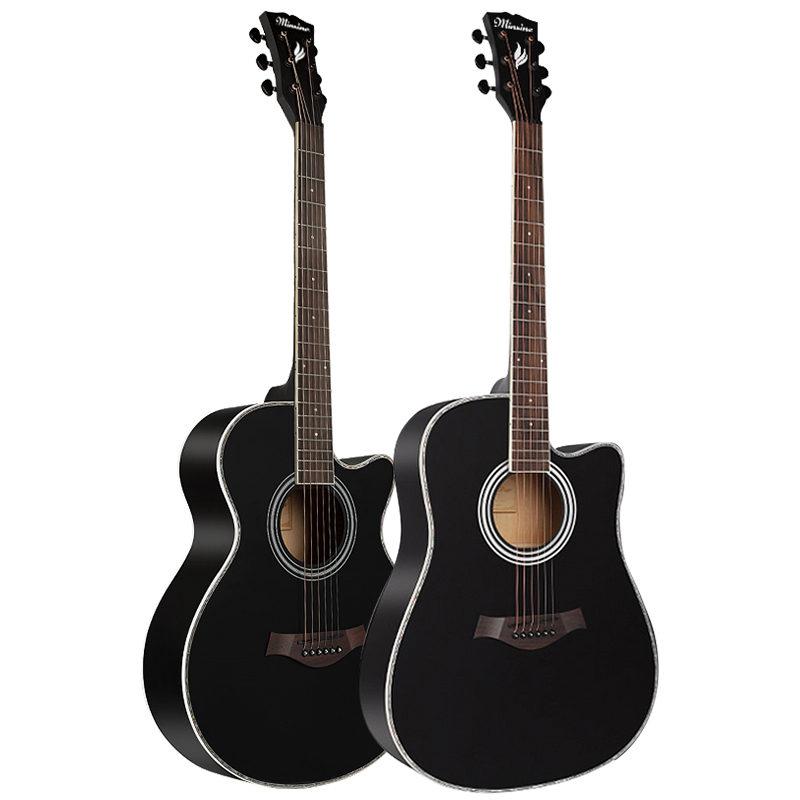
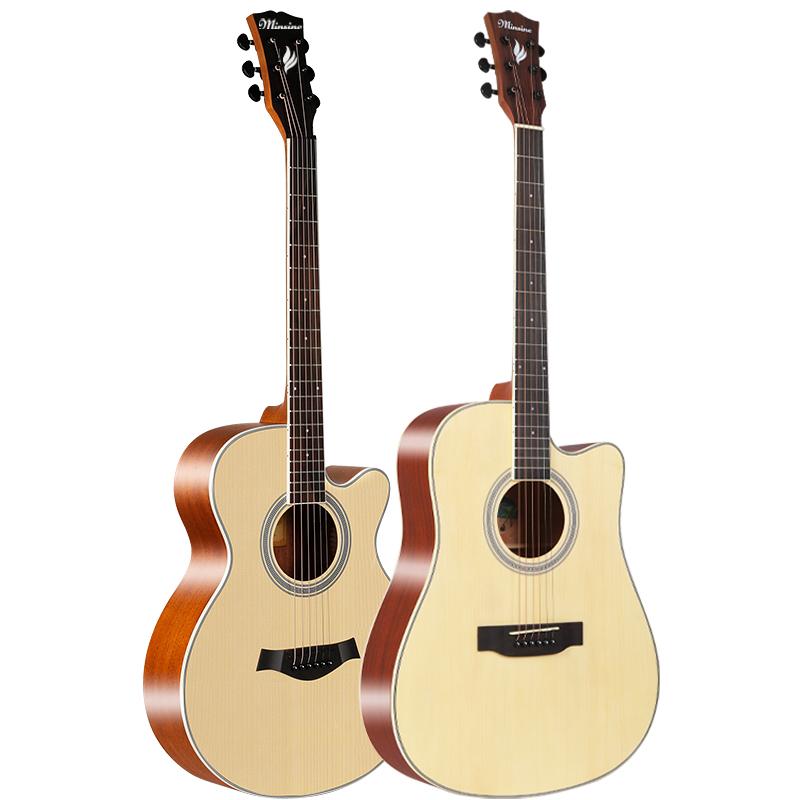
For laminate and solid-top acoustic guitars (such as the Minsine MS-36 series), soundboard response depends on top-plate mass and bracing architecture. We utilize scalloped X-bracing geometries crafted from sitka spruce. This design offers structural support against 160 lbs of string tension while allowing the soundboard perimeter to vibrate freely, maximizing low-end projection and harmonic resonance.
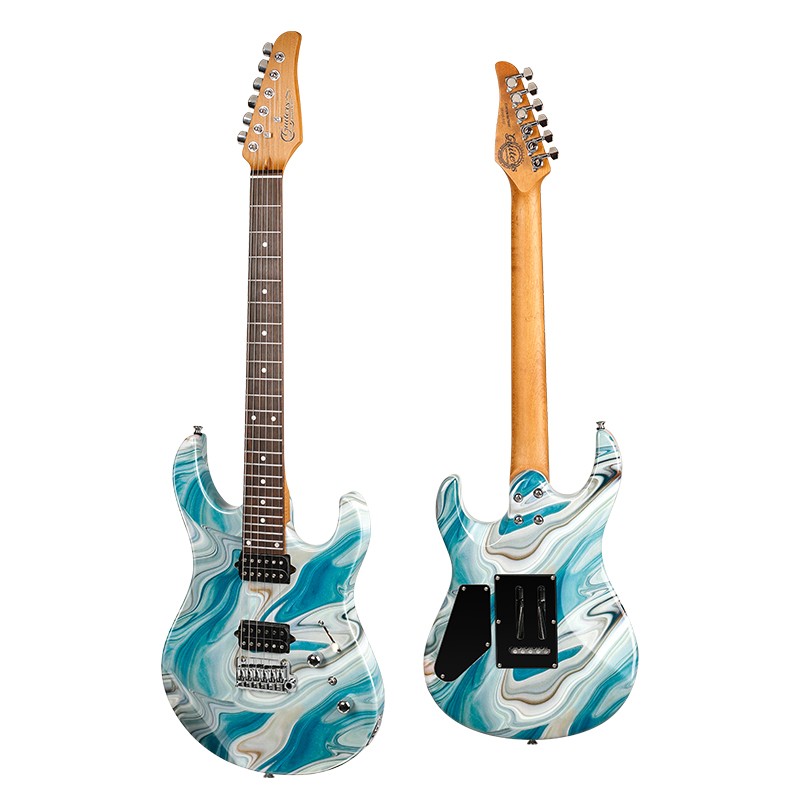
Electric guitar tone is governed by magnetic flux, coil winding density, and magnet metallurgy. Our high-output humbuckers (such as those on the GT-20D-HH series) feature hand-selected Alnico 5 magnets and high-purity 42 AWG copper wire. This configuration yields crisp high-frequency transients, punchy midranges, and zero 60Hz hum under high-gain amplification.
Analyzing technological shifts, aesthetic demands, and eco-conscious manufacturing trends driving market expansion.
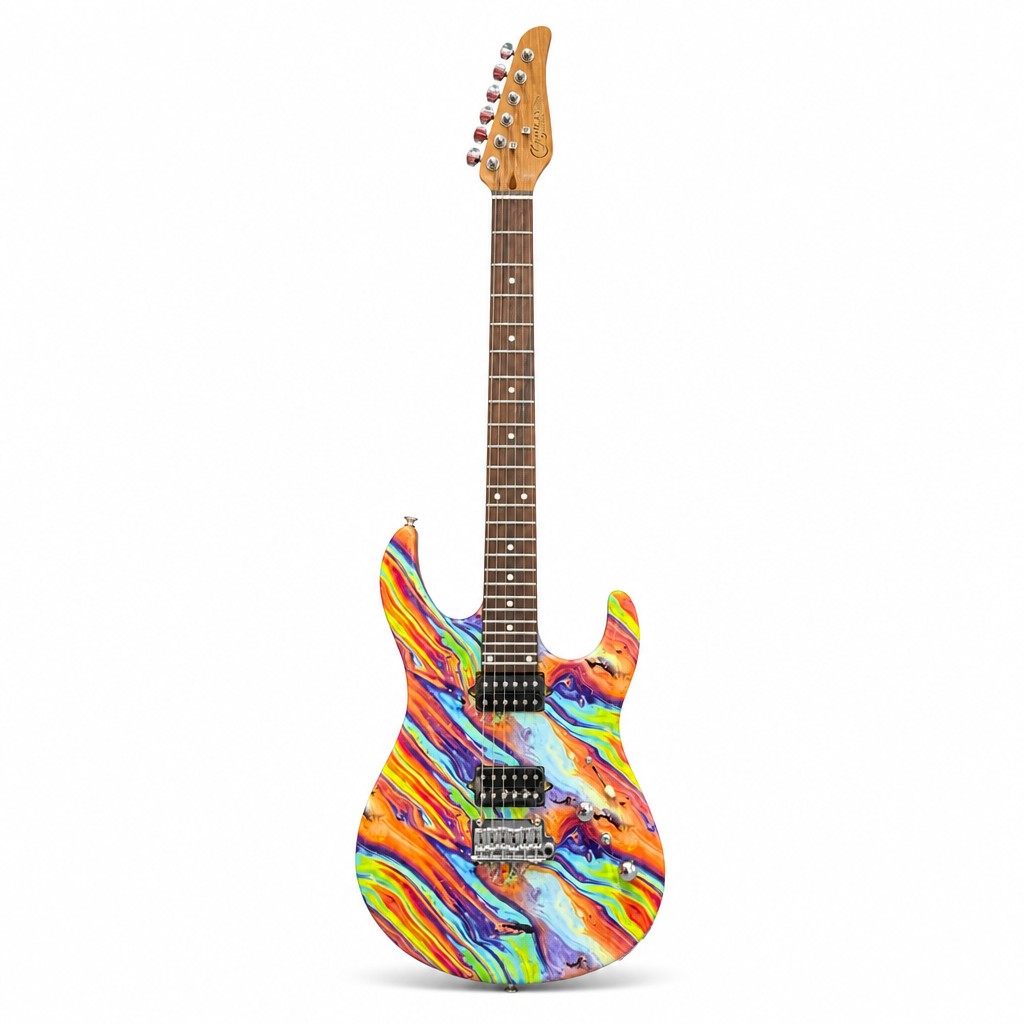
Traditional sunburst and solid gloss finishes are increasingly supplemented by complex, high-impact aesthetic treatments. Technological advancements in hydro-transfer printing and UV-cured digital swirl dipping enable cost-effective mass production of intricate designs, such as graffiti, psychedelic swirl, and galaxy patterns on flame maple veneers, attracting younger guitarists and digital creators.
Due to CITES environmental protection measures and wild harvest restrictions on Dalbergia rosewood species, international buyers are adopting engineered high-density technical woods and synthetic rosewood composites. These materials match the acoustic velocity, Janka hardness, and dark aesthetics of traditional rosewood without requiring complex CITES import paperwork.
Consumer preferences are shifting away from heavy 4.5kg mahogany solid-body guitars toward lighter, more resonant tonewoods. Asian Chinaberry (Melia azedarach), Okoume, and Poplar offer warm midranges and rich acoustic sustain at significantly reduced body weights (under 3.2kg total build weight), lowering international air and sea freight costs per unit.
Physical characteristics, acoustic properties, and target product positioning for OEM/ODM purchasing managers.
| Tonewood / Component | Janka Hardness / Spec | Resonant Characteristics | Primary Application | OEM Custom Options |
|---|---|---|---|---|
| Spruce Top (Laminate / Solid) | ~480 lbf (Light & Stiff) | Clear projection, high dynamic range, crisp highs | Acoustic Guitars (MS-36 Series) | Natural, Sunburst, Vintage Tint, Gloss/Satin Poly |
| Roasted Maple (Thermo-Cured) | ~1,450 lbf (Extreme Stability) | Punchy attack, bell-like clarity, long sustain | Electric Necks (GT-20D Series) | C/D/U Profiles, Satin Finish, Laser Logo Engraving |
| Chinaberry / Okoume | ~600–740 lbf (Ergonomic Weight) | Warm low-mids, smooth response, strong resonance | Electric Bodies (Bullfighter GT-20D) | Flame Maple Top Veneer, Hydro-Dip Graphics |
| Rosewood / Tech-Rosewood | ~1,780 lbf (High Oil Density) | Smooth surface feel, warm overtones, wear resistant | Fingerboards (22/24 Frets) | Custom Pearloid Inlays, Radius (9.5" to 14") |
| Alnico 5 Humbuckers | DC Resistance: 8.5K–14.5KΩ | High output, tight bass response, articulate highs | HH / HSS Electric Configurations | Custom Winding, Zebra/Chrome/Gold Covers |
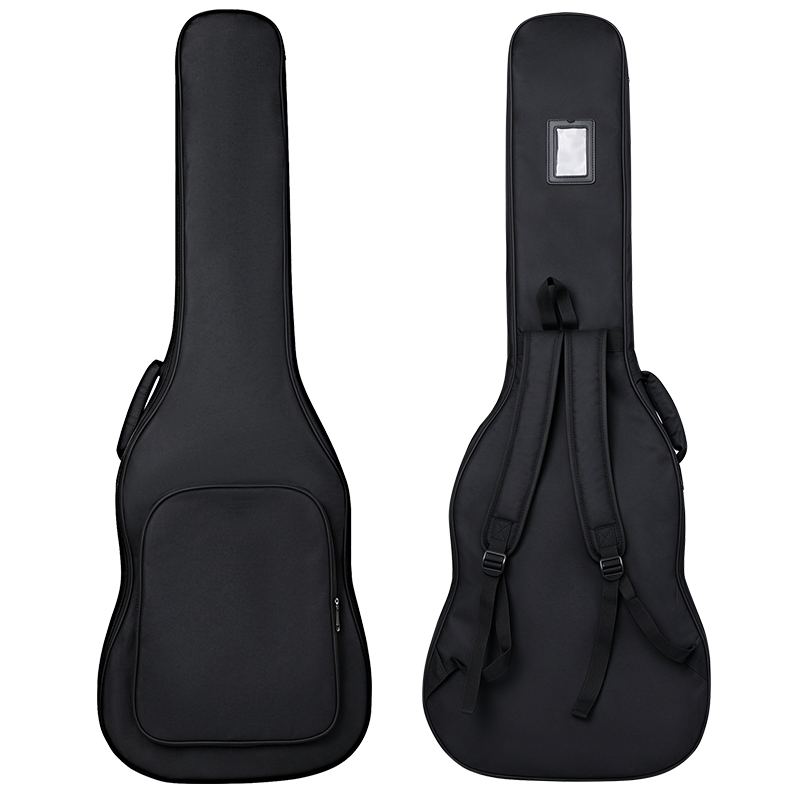
| 600D Oxford Nylon | Waterproof / 10mm Padding | High tear resistance, ergonomic travel protection | Gig Bags & Cases | Silk-Screen Logo, Dual Shoulder Straps, Pocket Sizing |
Changsha YBUL Instrument Co., Ltd. combines verified factory footprint, experienced lutherie teams, and strict multi-tier quality control.
Credibility requires rigorous third-party validation. Our manufacturing premises, production line workflows, and corporate compliance have been audited onsite by SGS Group. Operating across 16,483 square meters of total facility space (including a 2,500㎡ corporate R&D hub in Changsha), we maintain verified standard operating procedures for raw timber inspection, CNC processing, assembly line calibration, and drop-test box packaging.
Every instrument produced on our line undergoes a 5-step quality audit prior to export packing:
1. Raw Timber EMC Check: Digital moisture meter reading before woodworking.
2. Pocket & Geometry Fit: Vernier caliper check on neck heel alignment.
3. Finish Integrity Inspection: High-lumen booth scan for finish flaws.
4. Electronic Circuit Continuity: Signal-to-noise ratio check across all pickup toggle modes.
5. Intonation & Setup: Electronic strobe tuning and action height setup (1.8mm bass, 1.5mm treble at 12th fret).
Technical and logistics answers for procurement officers, chain distributors, and brand managers.
We operate as a fully verified combined Manufacturer and Trading Company. Our facility footprint encompasses two dedicated production factories with 16,483 square meters of manufacturing floor space, complemented by our corporate sales, export logistics, and R&D headquarters in Changsha, Hunan. Our operations have been assessed onsite by SGS Group, providing verified operational transparency.
Standard OEM custom headstock branding and logo printing start at a baseline MOQ of 30 to 50 units per color/model batch, depending on the timber and finishing requirements. For full custom ODM body tooling or proprietary neck profiles, MOQs are determined during the engineering blueprint phase. Stock catalog samples can be dispatched promptly for quality testing.
We use high-frequency vacuum kiln drying to stabilize raw timber at an optimal 8–10% moisture content. For premium electric ranges, we recommend our thermo-cured Roasted Maple necks, which feature caramelized cellular structures that drastically reduce moisture absorption. Furthermore, all necks feature dual-action steel truss rods, enabling simple seasonal truss adjustment.
Yes. We offer complete custom packaging solutions. Options include 5-ply reinforced corrugated cardboard shipping cartons, custom color boxes, silk-screened 600D Oxford waterproof gig bags (such as our Bullfighter series), custom instruction manuals, branded pick sets, and barcode labeling designed for retail distribution centers.
We support a broad set of international trade terms including FOB, CFR, CIF, EXW, FCA, DDP, and DDU. Accepted payment methods encompass T/T (Telegraphic Transfer), L/C (Letter of Credit at sight), PayPal, Western Union, and Trade Assurance Escrow, handling major currencies such as USD, EUR, GBP, CAD, AUD, JPY, and CNY.
Sample prototyping for existing catalog models with custom logo branding typically requires 10 to 15 working days. Complex custom ODM prototypes involving new body shapes, custom pickup voicings, or specialized hydro-dip graphics generally require 25 to 35 days for engineering drawing confirmation, tooling setup, pre-production craft, and final acoustic testing.
Whether you require scaled OEM manufacturing, custom ODM prototype development, or direct factory wholesale orders, our lutherie engineers and export managers are ready to support your line.
Inquire Now