 English
 Español
 Deutsch
 Français
 Português
 Italiano
 Русский
 日本語
 한국어
 العربية English Español Deutsch Français Português Italiano Русский 日本語 한국어 العربية
High-precision acoustic guitars, custom electric instruments, and hardware manufactured in our SGS-assessed production facilities.
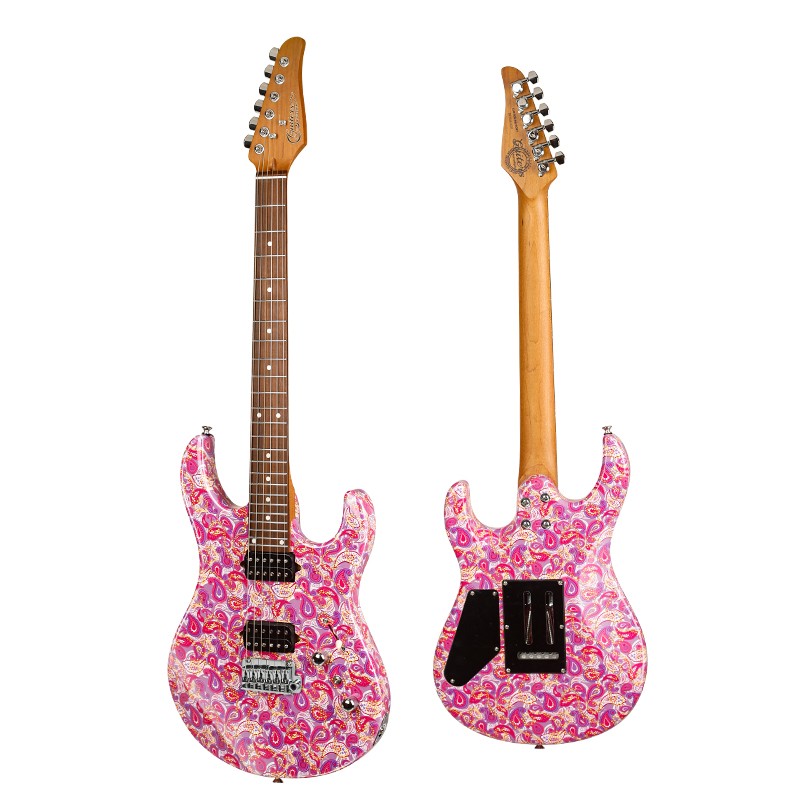


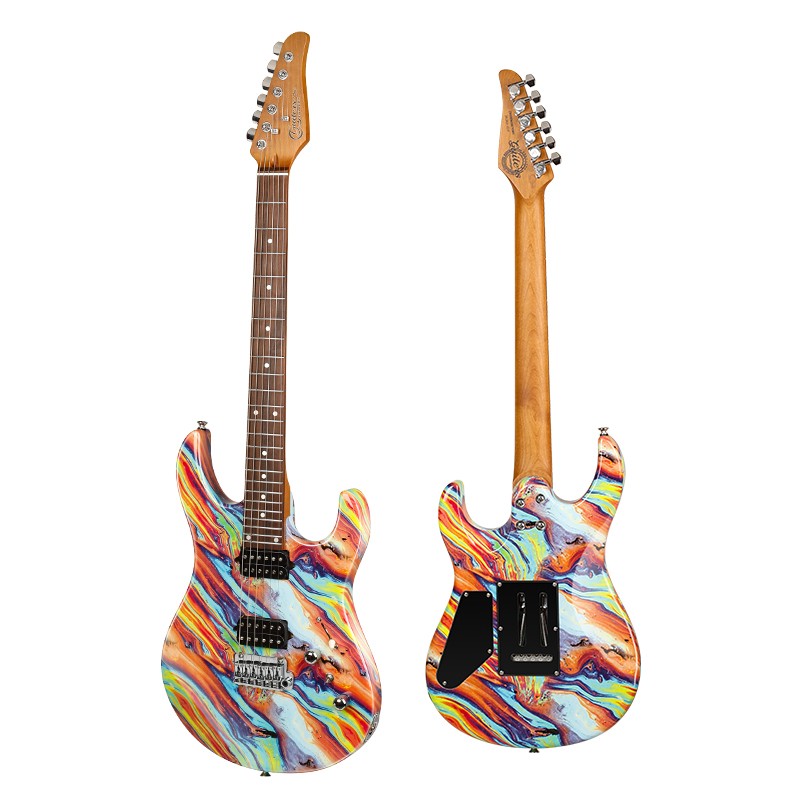
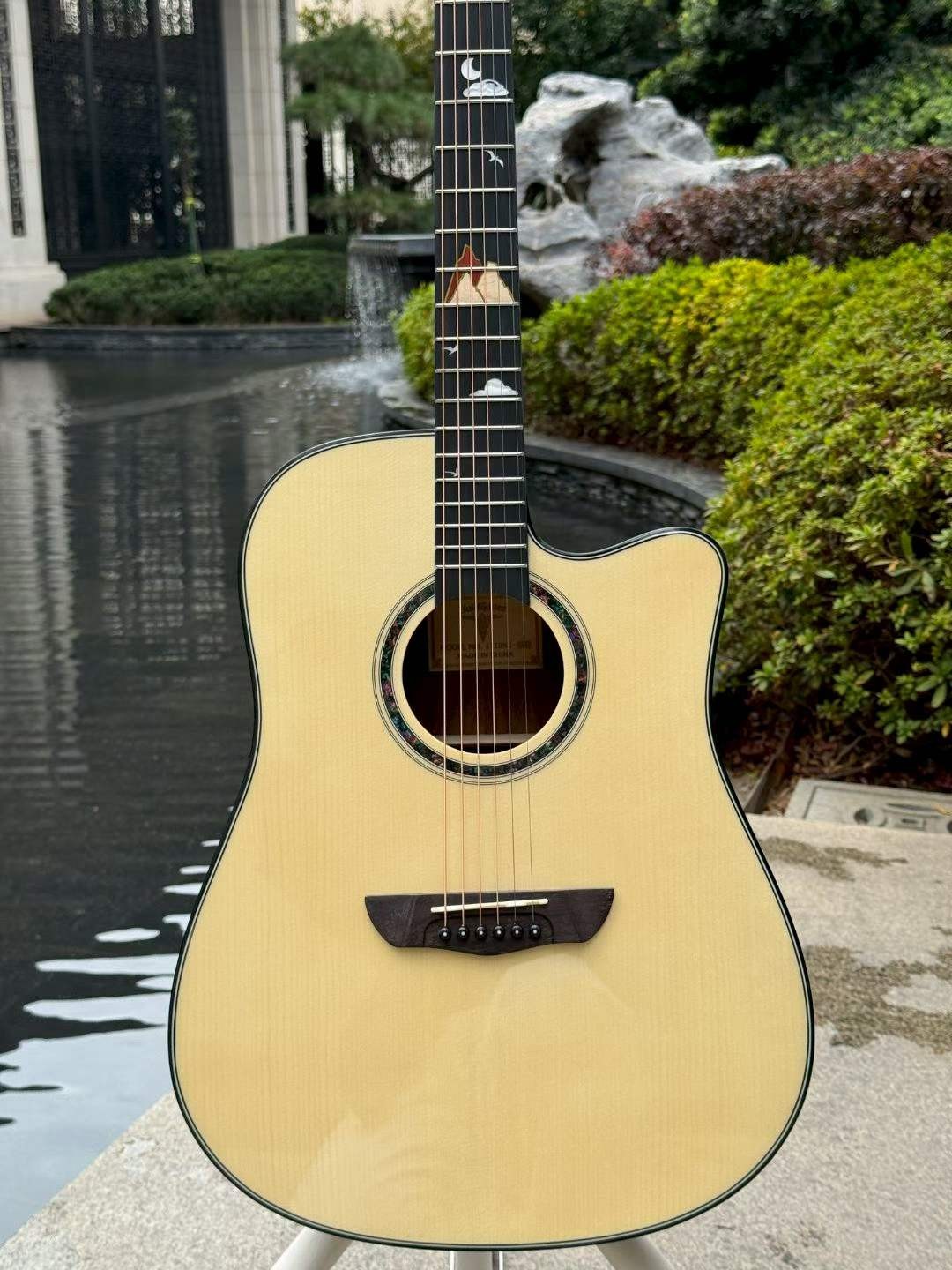

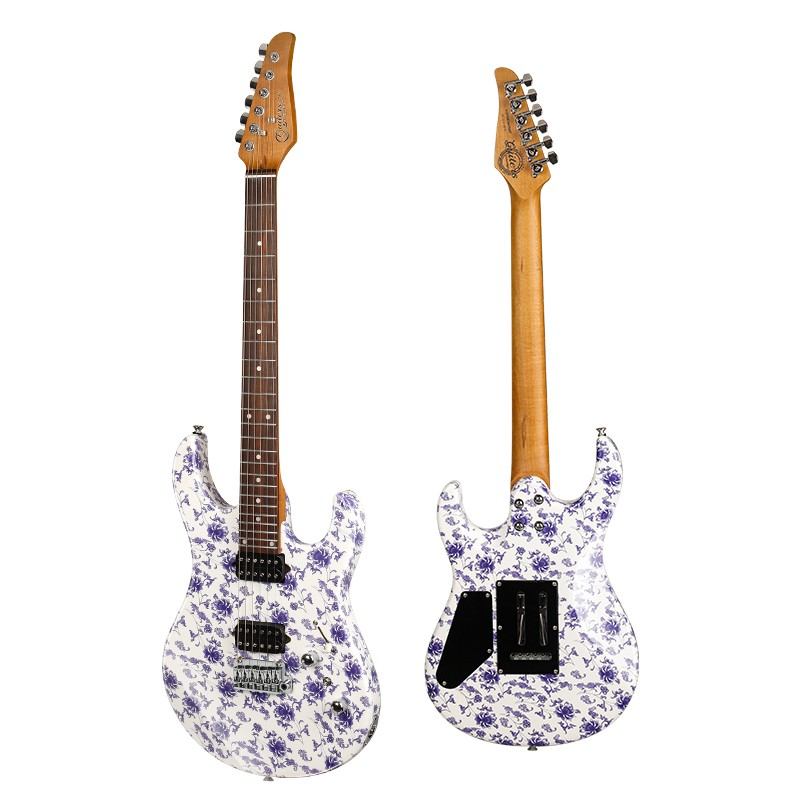
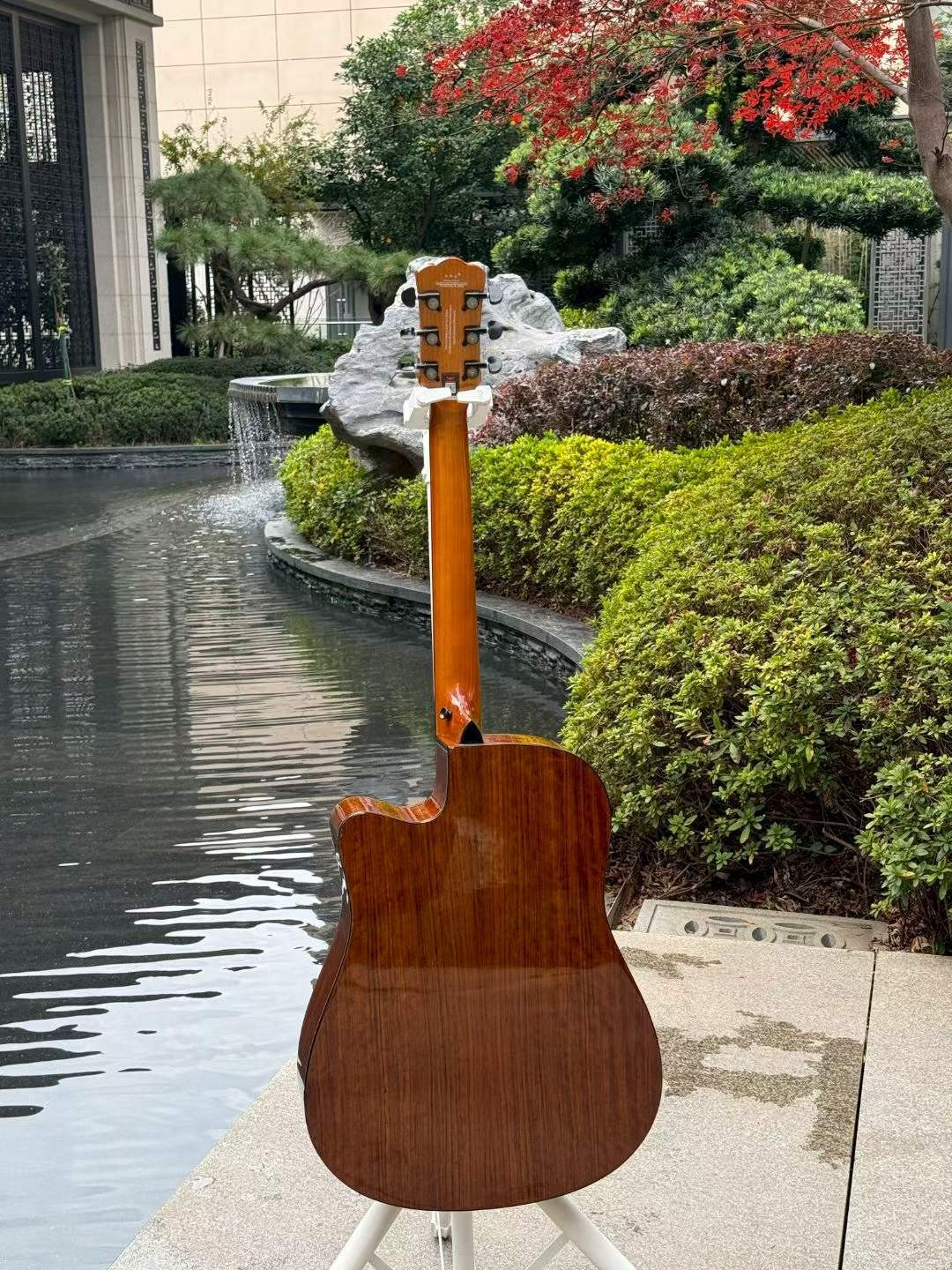
The global musical instrument industry is experiencing a profound structural shift toward semi-assembled DIY acoustic guitar kits, un-finished body blanks, and complete pre-routed guitar building bundles. Driven by rising consumer enthusiasm for custom luthiery, music school craftsmanship programs, and boutique private-label instrument brands, commercial demand for high-precision acoustic guitar kits has expanded exponentially. According to recent trade data, the international market for OEM/ODM acoustic guitar kits is projected to maintain a compound annual growth rate (CAGR) of 6.8% through 2030.
However, for enterprise procurement directors, brand owners, and wholesale distributors, evaluating acoustic guitar kit manufacturers & factories requires far more than basic price-per-unit comparisons. An acoustic guitar kit is a highly sensitive biomechanical assembly: variation in timber equilibrium moisture content (EMC), neck-joint tenon tolerances exceeding ±0.02mm, or misaligned soundboard bracing can lead to structural collapse, warped necks, or dull acoustic projection once assembled by the end customer.
This whitepaper provides a authoritative evaluation framework designed to assist procurement specialists in identifying top-tier acoustic guitar kit manufacturers. Grounded in Google’s Search Quality Rater Guidelines for E-E-A-T (Experience, Expertise, Authoritativeness, and Trustworthiness), this report details essential manufacturing standards, tonewood physics, precision CNC machining practices, CITES compliance protocols, and vendor verification benchmarks.
Manufacturing a commercial-grade DIY acoustic guitar kit requires a higher level of structural consistency than building fully finished instruments. When producing finished guitars, factory luthiers can adjust bridges, shim necks, and level frets to correct minor timber variations on the bench. In contrast, an acoustic guitar kit must be engineered so that end buyers—ranging from amateur hobbyists to retail customers—can achieve perfect neck angle alignment, accurate scale intonation, and structural longevity with minimal woodworking tools.
The primary root cause of post-assembly guitar cracking, fret sprout, and body warping is improperly seasoned wood. Leading factories utilize automated High-Frequency Vacuum Wood Drying chambers to stabilize tonewood blanks. Acoustic guitar kits require timber brought to a strictly controlled Equilibrium Moisture Content (EMC) of 8% to 10% for body woods and 6% to 8% for fretboards and necks. Vacuum drying relieves internal wood tensions while preserving acoustic resonance fibers.
The neck-to-body joint is the structural and acoustic heart of an acoustic guitar kit. Modern factories employ high-speed 5-Axis CNC routers to carve dovetail tenons or precision bolt-on joints. Dimensional accuracy must be held within ±0.02mm to guarantee a tight wood-to-wood mechanical coupling. Proper joint seating ensures maximum vibration transfer from the neck to the soundboard without requiring manual rasping or excessive glue fills during customer assembly.
Pre-carved Sitka Spruce or AAA Engelmann bracing systems designed for optimal stiffness-to-weight ratios and open acoustic projection.
Automated fretboard grooving with crown beveling to eliminate sharp fret edges and guarantee accurate intonation across all 20 or 21 fret positions.
Ethically sourced, legally verified tonewood supply chain management for Rosewood, Mahogany, Spruce, and Walnut export documentation.
To establish a definitive ranking of the top 10 acoustic guitar kit manufacturers globally, our research team analyzed over 45 industrial guitar manufacturing enterprises across Asia, North America, and Europe. Suppliers were evaluated across five critical quantitative and qualitative dimensions:
The comparative matrix below outlines operational benchmarks representative of tier-1 guitar kit factories versus generic trade intermediaries.
| Evaluation Parameters | Tier-1 OEM Factory (e.g., YBUL) | Standard Regional Producer | Trading Intermediary |
|---|---|---|---|
| Onsite Audits | SGS Group / Bureau Veritas Verified | Basic Local Registration | No Own Factory Facilities |
| Facility Footprint | 15,000㎡ – 20,000㎡ Space | 2,000㎡ – 5,000㎡ Space | Office/Showroom Only |
| Monthly Output | 15,000+ Acoustic/Electric Units | 1,000 – 3,000 Units | Variable / Out-Sourced |
| Joint Machining Fit | ±0.02mm Precision CNC | ±0.15mm Manual Milling | Varies by Sub-Contractor |
| Wood Drying Technology | Automated Vacuum Kilns (6-10% EMC) | Air Drying / Basic Oven | Uncontrolled Moisture |
| Custom Branding | Complete OEM Logo, Headstock & Packaging | Basic Decal Application | Standard Stock Products |
Among global manufacturers, Changsha YBUL Instrument Co., Ltd. (operating under the renowned Bullfighter / YBUL brand tags) stands out as an exemplary benchmark for high-volume acoustic guitar, electric guitar, and guitar kit production. Founded in 2015 and headquartered in Changsha, Hunan, China, YBUL operates an integrated enterprise combining advanced R&D, two specialized manufacturing bases, and a international trade team.
YBUL’s specialized acoustic guitar kit division offers complete knocked-down (CKD) and semi-assembled (SKD) kits featuring pre-sanded Sitka Spruce tops, book-matched Walnut or Mahogany back and sides, radiused Rosewood fingerboards, and pre-cut truss rod channels. By employing strict quality checkpoints across 9 key manufacturing steps—from timber selection to final acoustic tuning checks—YBUL ensures every kit yields an instrument with superior tone and perfect alignment.
As the international musical instrument supply chain evolves, procurement directors must anticipate emerging technology and consumer shifts. Future growth in the acoustic guitar kit sector will be defined by three key trends:
Torrefaction—a thermal treatment process in an oxygen-deprived environment—drives out volatiles and crystallizes sugars within wood fibers. Torrefied spruce tops and roasted maple necks offer exceptional dimensional stability, resistance to environmental humidity fluctuations, and an aged, vintage resonance. Top manufacturers are expanding torrefied option lines across acoustic guitar kits to give end users boutique tone out of the box.
Environmental regulations regarding volatile organic compounds (VOCs) are tightening across European and North American markets. Forward-thinking factories are shifting from nitrocellulose and polyurethane solvent paints to UV-cured waterborne sealers. In acoustic guitar kits, offering pre-sealed, grain-filled tops allows DIY builders to easily apply thin gloss or satin topcoats without requiring complex commercial spray equipment.
To reduce assembly failure rates among retail buyers, advanced guitar factories are implementing laser-guided bridge positioning marks and pre-drilled pin holes indexed exactly to the scale length. Furthermore, modular pickup routings (such as under-saddle piezo transducers combined with soundhole controls) are becoming standard inclusions in complete acoustic guitar building bundles.
Direct responses to critical inquiries submitted by commercial buyers, brand managers, and procurement officers.