 English
 Español
 Deutsch
 Français
 Português
 Italiano
 Русский
 日本語
 한국어
 العربية English Español Deutsch Français Português Italiano Русский 日本語 한국어 العربية
Explore premier OEM/ODM guitar builds, ergonomic headless innovations, solid-top acoustics, and tour-grade accessories directly manufactured by Changsha YBUL Instrument Co., Ltd.

Over the past five years, the electric string instrument market has experienced an unprecedented structural pivot toward Headless Electric Guitars and multi-scale ergonomic designs. Originally regarded as a niche aesthetic popularized in the late 1980s, modern headless guitars have matured into high-performance, studio-grade tools favoured by touring musicians, studio creators, and modern genre guitarist communities (progressive metal, math rock, jazz fusion, and electronic crossover).
For international musical instrument importers, brand owners, and wholesale distributors, sourcing headless guitars from premier Chinese guitar suppliers represents a strategic opportunity. China’s advanced guitar manufacturing ecosystem—specifically centralized industrial hubs such as Hunan and Guangdong—combines state-of-the-art multi-axis CNC routing, automated timber thermal treatment (roasted maple), and precision bridge micro-mechanics at unmatched scale.
Why Tier-1 importers are transitioning OEM production to specialized Chinese facilities:
Understanding the engineering breakthroughs driving manufacturing quality in modern Chinese headless guitar supply chains.
The core challenge of traditional headless guitars lay in proprietary, fragile bridge mechanics. Modern OEM leaders utilize brass or hard-anodized aircraft aluminum monorail bridge saddles. Each string operates on an isolated bridge system featuring integrated rotary micro-tuners and brass ball-end string clamps, ensuring resonance isolation and pitch retention under aggressive bending.
Humidity fluctuations during export transport can ruin string instruments. Leading China factories deploy High-Frequency (HF) Vacuum Drying kilns to stabilize raw tonewoods (Okoume, Chinaberry, Roasted Maple, Spruce). Moisture content is controlled at an exact 8%–10% threshold, preventing fret-sprout, neck bow, or finish cracking in European and North American climates.
By baking hard maple timber in an oxygen-free oven at 180°C–220°C, sugar resins inside the wood caramelize. The resulting "Roasted Maple" neck becomes impervious to atmospheric moisture changes, delivers acoustic resonance comparable to 30-year vintage wood, and exhibits a rich golden-amber tone without requiring heavy polyurethane lacquers.
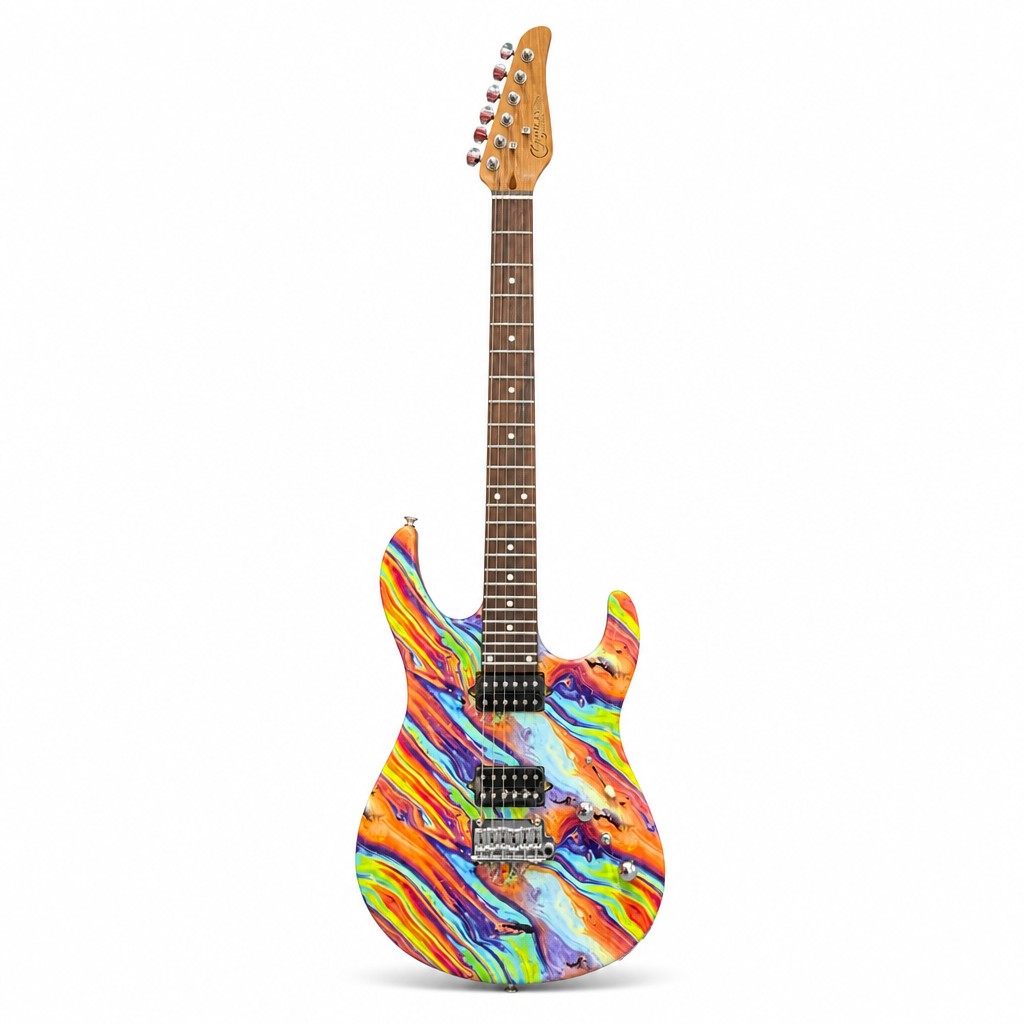
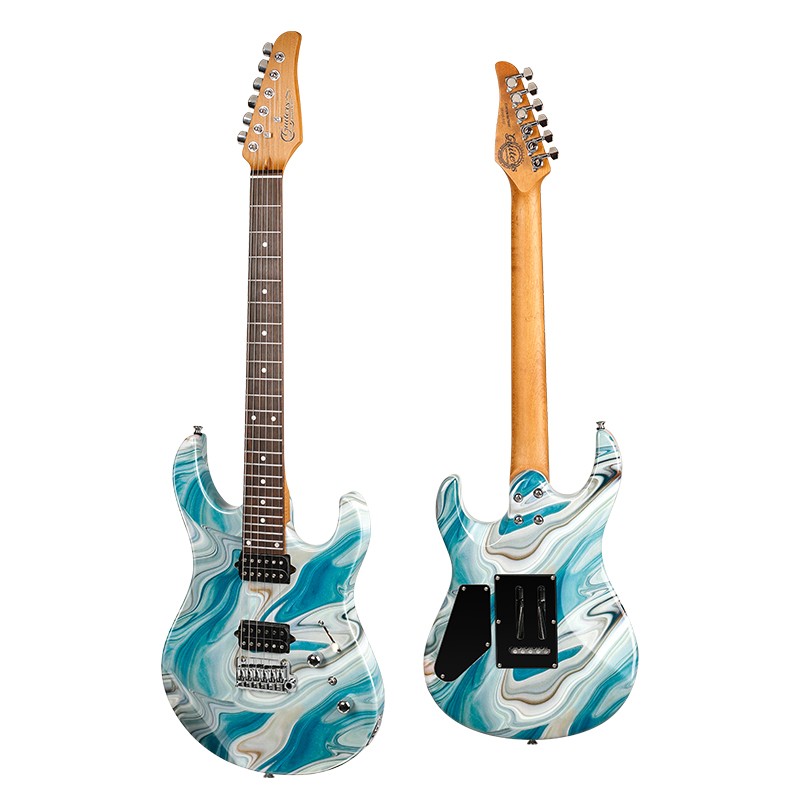
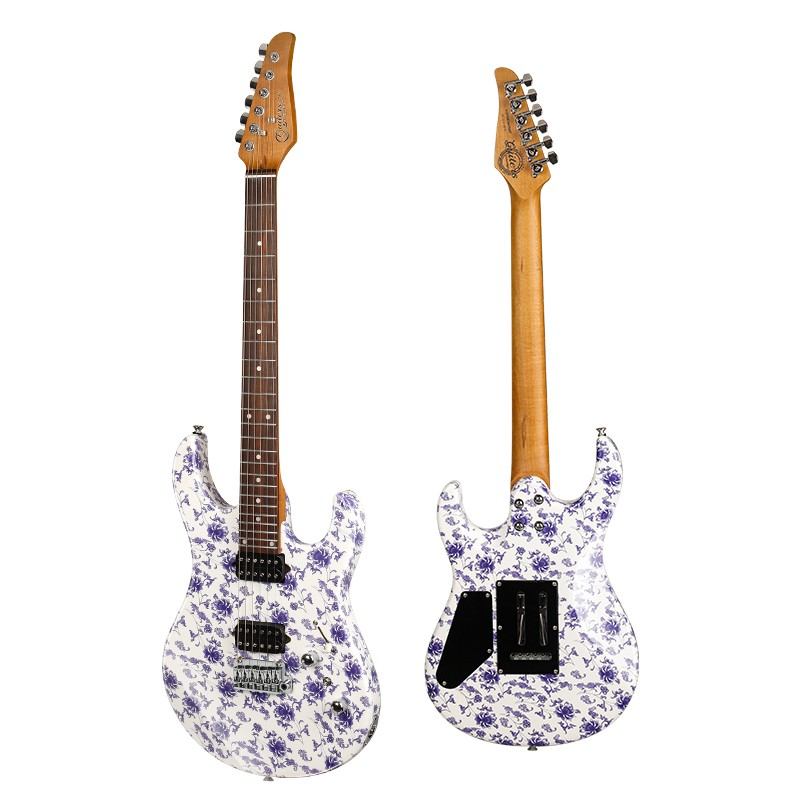
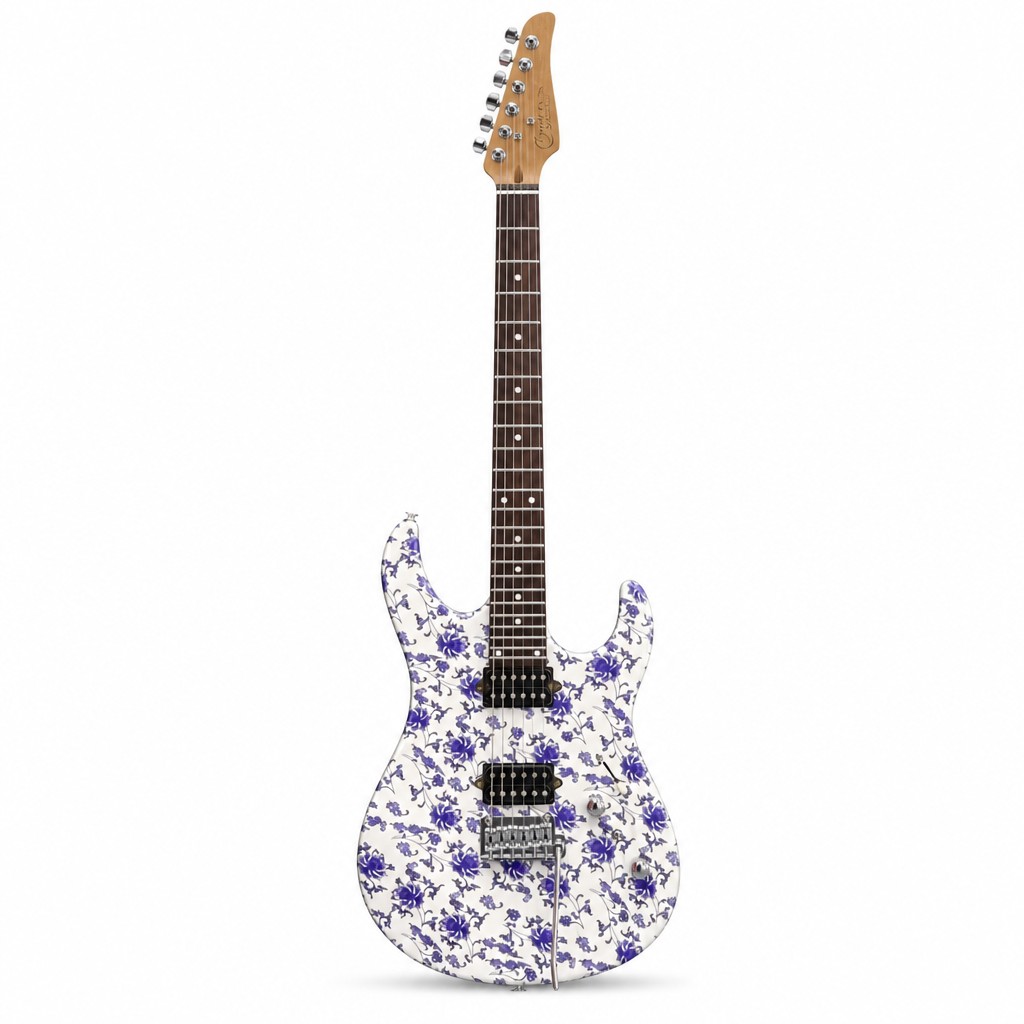
Aesthetic customization drives modern instrument sales. Innovations like water-transfer printing (such as GT-20D Blue and White Porcelain or Psychedelic Swirl finishes) allow complex graphic patterns to seamlessly wrap body contours with smooth coat integration, delivering high visual impact for brand OEM product lines.
From Alnico 5 high-output humbuckers with coil-splitting toggles to active silent preamp circuits, China factories engineer pickups tailored to modern genre dynamics. Vacuum-wax potting guarantees zero microphonic feedback at stage-volume gain levels.
As global musical instrument retail shifts toward direct-to-consumer (D2C) online sales channels, Amazon storefronts, and specialized music e-commerce sites, procurement strategies are evolving rapidly. B2B buyers must adapt to the following structural trends:
Multi-scale fingerboards (e.g., 25.5” treble scale to 26.5” bass scale) align with natural hand wrist rotation and optimize string tension for lower drop-tunings. Expect fanned-fret designs to transition from high-end custom boutique shops into standard OEM catalog offerings.
With strict international regulations on CITES-listed Rosewood (Dalbergia), top factories are substituting sustainably harvested Chinaberry, Sapele, Laurel, and high-density Technical Wood fretboards that mimic ebony density while ensuring smooth customs clearance globally.
Traditional factory MOQs of 500 units per color are giving way to flexible, agile OEM programs. Facilities equipped with automated CNC tool-changers can support small-batch custom runs (50–100 units) with custom headstock logos, custom water-transfer artwork, and specialized hardware finishes.
A comparative performance matrix evaluating technical capability, cost efficiency, and export reliability.
| Evaluation Parameter | Changsha YBUL Instrument Co. (Tier-1 OEM) | Traditional Guitar Workshop | Trading Trading Middleman |
|---|---|---|---|
| Verification & Audit Status | SGS Onsite Assessed (16,483㎡) | Unverified Small Facility | Office-Only / No Factory |
| Production Capacity | 15,000 Guitars / Month | 1,000–2,000 Guitars / Month | Uncontrolled External Sourcing |
| Machinery & Precision | Multi-Axis CNC, HF Vacuum Kilns | Manual Jigs, High Tolerances | N/A (Outsourced) |
| Customization Scope (OEM) | Full (Body shape, Finishes, Hardware, Packaging) | Limited to Stock Shapes | Standard Stock Products Only |
| QC & Moisture Control | 9-Stage In-Line QC, Caliper & Pitch Tuning | Visual Inspection Only | Random External Sampling |
| Export Compliance | Full CE, ROHS, CITES Tonewood Compliance | Inconsistent Documentation | Varies By Sub-contractor |
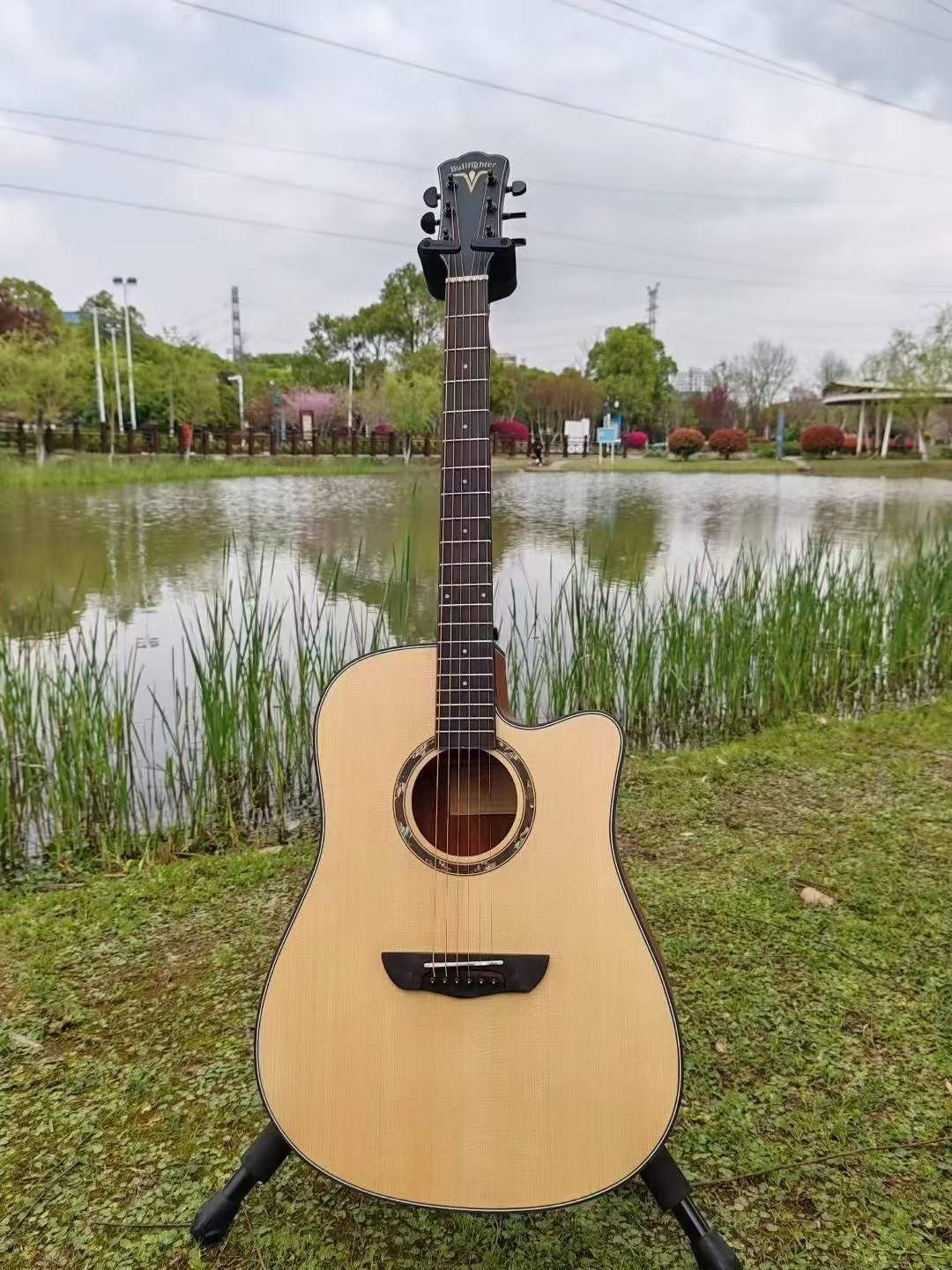
Founded in 2015 in Changsha, Hunan, Changsha YBUL Instrument Co., Ltd. stands as a premier manufacturer and exporter of electric guitars, electric basses, solid-top acoustics, electronic drum sets, and professional amplifiers. Operating two specialized manufacturing bases covering 16,483 square meters of workshop space, YBUL integrates rigorous craftsmanship with automated industrial line design.
Assessed onsite by SGS Group, our facility maintains a robust quality management infrastructure employing over 150 skilled luthiers and technicians. Our monthly output exceeds 15,000 string instruments, serving leading music brands and distributors across North America, South America, Western Europe, and Southeast Asia.
Core Enterprise Superiority:
Critical insights for procurement managers, brand founders, and musical instrument buyers evaluating China headless guitar suppliers.
We are an verified Manufacturer and Trading Company. Our manufacturing facilities cover 16,483 square meters across two factory sites, complemented by our office and R&D center in Changsha, Hunan. Our operations are fully assessed onsite by third-party inspection leader SGS Group.
Headless guitars require significantly tighter engineering tolerances. Because the traditional headstock tuning pegs are eliminated, the entire string tension resides on the headpiece locking nut and the bridge micro-tuners. Body pocket CNC routing must be precise to 0.05mm to ensure perfect string alignment and neck geometry.
Our standard OEM minimum order quantity starts at 30 to 50 units per model/finish for stock body designs with custom brand logos. Fully custom body shapes and proprietary hardware builds typically require 100 to 200 units depending on wood specs and tooling requirements.
Every piece of timber undergoes High-Frequency Vacuum Kiln drying to achieve an optimal moisture content of 8% to 10%. Additionally, we offer Roasted Maple (thermal treatment) neck options, which crystallizes internal sap, making the neck virtually immune to humidity fluctuations during international shipping.
Yes. We encourage custom sample builds for testing tone, action, body contouring, finish accuracy, and logo placement. Sample lead times generally range between 15 and 25 days depending on specification complexity.
We offer flexible commercial shipping terms including FOB (Free on Board), CIF, CFR, EXW, DDP (Delivered Duty Paid), and DDU. Accepted payment methods include Wire Transfer (T/T), Letter of Credit (L/C), Credit Card, and PayPal in major currencies (USD, EUR, GBP, CAD, AUD, JPY, CNY).