English
 Español
 Deutsch
 Français
 Português
 Italiano
 Русский
 日本語
 한국어
 العربية English Español Deutsch Français Português Italiano Русский 日本語 한국어 العربية
Explore our precision-crafted instruments, ergonomic stage hardware, and waterproof transport protection. Manufactured under SGS-inspected quality management systems.
Headquartered in Changsha, Hunan, Changsha YBUL Instrument Co., Ltd. stands as a premier Tier-1 OEM/ODM solid body guitar manufacturer in China. Established in 2015, our modern enterprise spans a 2,500㎡ corporate R&D head office alongside two massive, specialized manufacturing facilities covering a total floor space of 16,483 square meters. Backed by a workforce of over 100 to 200 skilled lutherie craftsmen and mechanical engineers, we combine centuries-old woodworking art with state-of-the-art automated CNC technology.
Unlike basic trading intermediaries, our factory premises have undergone comprehensive third-party onsite auditing by SGS Group. We maintain an agile production capacity capable of yielding more than 15,000 high-grade acoustic and solid body electric guitars per month, alongside over 1,000 complete sets of electronic drums, percussion hardware, and high-fidelity guitar amplifiers. Serving international instrument brands, regional distributors, and e-commerce private labels across North America, South America, Western Europe, and Southeast Asia, YBUL provides direct factory-to-market pricing with strict European and American quality compliance.
Every timber block undergoes high-frequency vacuum drying to achieve an equilibrium moisture content (EMC) of 6% to 8%. This guarantees zero structural warping or finish cracking in variable overseas climates.
High-precision multi-axis CNC routers machine pickup cavities, truss rod channels, and neck pockets within a tighter tolerance than ±0.05mm, ensuring seamless neck-to-body wood contact and optimum acoustic resonance.
Nine distinct inspection gates monitor raw timber grading, fret dressing, electronic shielding, lacquer curing, intonation tuning, and ISTA 1A carton drop testing prior to export shipping.
In solid body electric guitar procurement, achieving competitive advantage requires understanding the relationship between tonewood density, neck heel mechanics, pickup metallurgy, and coating thickness. When string vibrations transfer to a solid body, the wood acts as a frequency filter rather than an acoustic amplifier. The body selectively absorbs certain acoustic frequencies while reflecting others back into the pickup's magnetic field.
Selecting the correct tonewood combination dictates the instrument's tonal profile, physical balance, and price positioning:
| Tonewood Spec | Average Density | Tonal Characteristics | Primary B2B OEM Application |
|---|---|---|---|
| Torrefied / Roasted Maple | 0.65 - 0.70 g/cm³ | Snappy treble, bright sustain, extreme structural stability | Pro-Tier Necks, 24-Fret Shred/Modern Electric Guitars |
| Selected Okoume | 0.38 - 0.50 g/cm³ | Warm, full-bodied low-mids, light weight for extended playing | Solid Body Electric Guitars & Basses (ST, TL, LP shapes) |
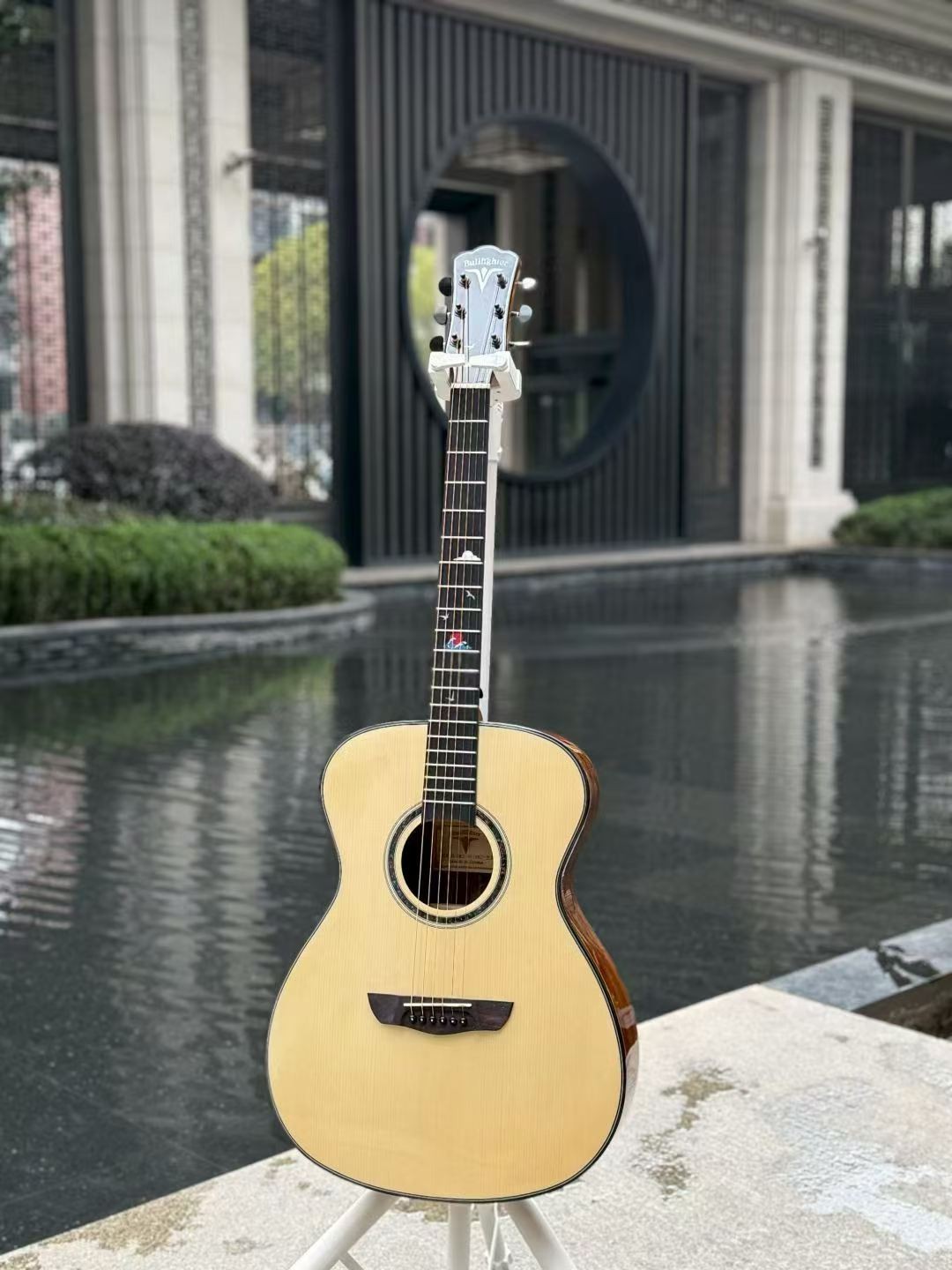
| Laminated / Solid Spruce | 0.42 - 0.48 g/cm³ | Broad dynamic range, punchy acoustic voice, fast response | Acoustic Dreadnought & Concert Cutaway Tops |
| Technical Rosewood / Laurel | 0.75 - 0.85 g/cm³ | Smooth feel, rich sustain, high resistance to finger wear | CITES-Compliant Fretboards & Acoustic Bridges |
In models such as our flagship GT-20D-HH Graffiti Impression Electric Guitar, we install customized double-humbucking (HH) pickup configurations powered by genuine Alnico 5 magnets. Compared to lower-cost ceramic magnets, Alnico 5 provides tighter bass response, smooth musical mids, and articulate high-frequency glass without harshness.
To prevent electromagnetic interference (EMI) and 60-cycle hum in modern studio environments, all YBUL control cavities and pickup routing channels are coated with high-conductive graphite paint or lined with heavy-gauge copper foil shielding grounded directly to the main pot ground loop. High-durability 500kΩ brass-shaft potentiometers and heavy-duty 3-way toggle switches guarantee 50,000+ switching cycles without dynamic audio crackle.
The global musical instrument market is undergoing a rapid evolution driven by changing consumer preferences, modern e-commerce channels, and environmental regulations. Importers, brand owners, and retail chain buyers must structure their supply chain to meet these five industry shifts:
Consumers now expect roasted maple necks and fingerboards even on entry-level to mid-tier electric guitars ($200–$500 retail). Torrefaction reduces warranty claims caused by neck bowing during seasonal humidity shifts. At YBUL, our industrial roasting kilns allow us to supply roasted maple necks across volume OEM production runs at minimal upcharge.
Global customs authorities enforce strict CITES (Convention on International Trade in Endangered Species) documentation on traditional Rosewood (Dalbergia). Forward-thinking procurement officers are transitioning to high-density technical woods, engineered rosewood composites, or laurel fretboards. YBUL offers fully CITES-compliant wood options for hassle-free customs clearance in North America and Europe.
Standard solid black and sunburst colors remain staples, but younger players favor striking visual aesthetics like graphic wraps, metallic chameleon paint, and matte satin bursts. Utilizing UV-curing lacquer spray lines, YBUL achieves ultra-thin, highly durable protective coats that don't choke wood resonance while dropping cure times from weeks to minutes.
Amazon merchants and boutique instrument brands require low-MOQ access to proprietary headstock shapes, custom fretboard inlays, customized hardware plating (black nickel, gold, chrome), and laser-engraved neck plates. YBUL’s dedicated R&D engineering team translates CAD/CAM files into finished production samples in as little as 14 business days.
Sourcing directly from a verified Chinese guitar manufacturer removes trading company margins and gives you full control over product specifications, quality assurance, and packaging design.
Customize every component: headstock profiles, branding decals, body contours, tonewood selection, binding, pickguard graphics, pickups, bridge mechanisms, tuning machine gear ratios (1:18 precision), and control wiring.
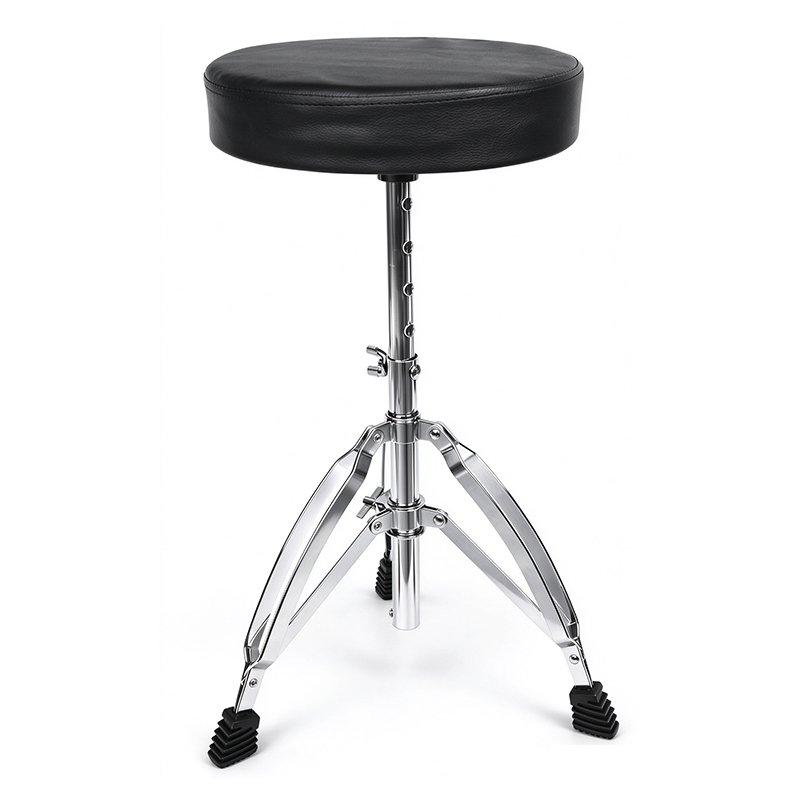
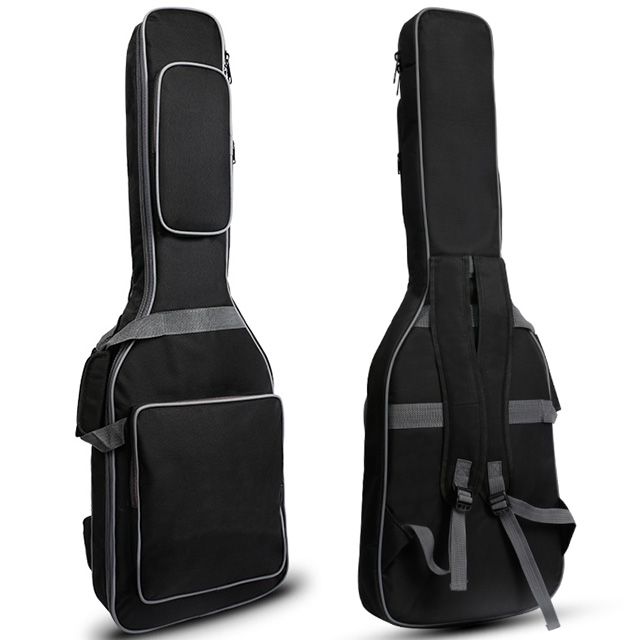
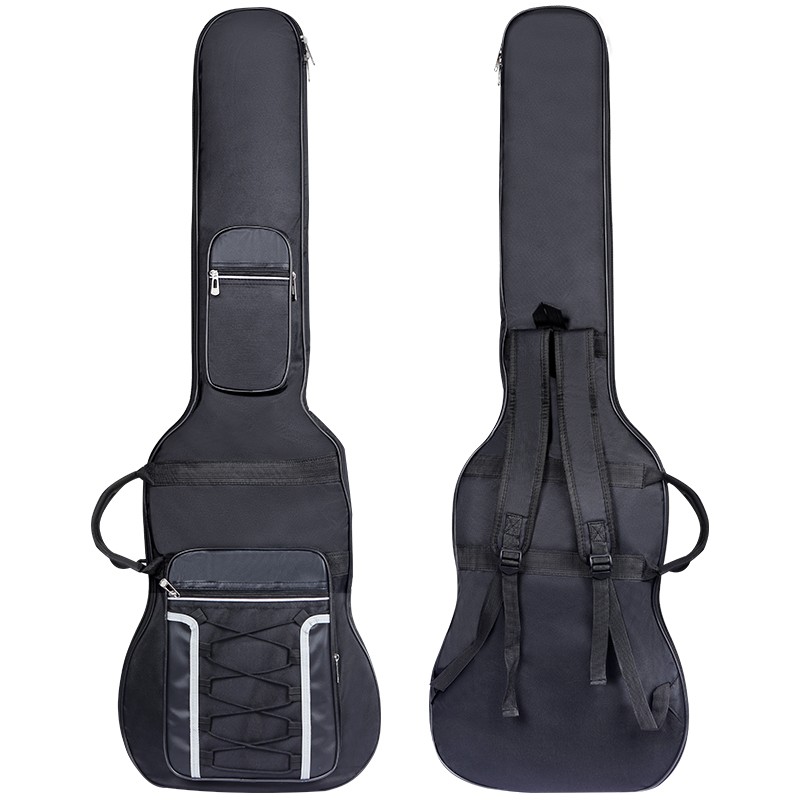
In addition to instruments, we manufacture high-grade gig bags (such as our 7mm waterproof soft bags and 600D Oxford padded electric bass bags), drum thrones, and amplifiers. Deliver complete, retail-ready starter bundles to your customers.
We support FOB, CFR, CIF, EXW, FCA, DDP, and DDU delivery terms across major sea ports and air hubs. Multiple payment methods accepted including T/T, L/C, PayPal, and Credit Card in USD, EUR, GBP, CAD, AUD, and JPY.
Key information for procurement directors, product managers, and music store owners evaluating factory partnerships in China.
Partner with China's leading solid body guitar manufacturer. Send us your custom specifications, target price point, or reference models, and our engineering team will provide a comprehensive quotation within 12 hours.