Acoustic Guitar Manufacturers & Supplier For Fukuoka

Precision Tonewood Engineering, Specialized Maritime Logistics, and Scalable OEM/ODM Production Hub

16,483㎡
Dual Manufacturing Plant Floorspace
15,000
Monthly String Instrument Run
SGS
Onsite Assessed & Audited Factory
99.87%
Procurement SLA Compliance Rate
Kyushu Market Intelligence

Acoustic Tonewood Engineering & Strategic Sourcing for Fukuoka

A rigorous examination of acoustic instrumentation procurement, structural wood acclimatization, and supply-chain risk mitigation for the Fukuoka Prefecture and greater Kyushu trade corridor.

Fukuoka occupies a critical geopolitical and cultural position in Japan's musical instrument retail ecosystem. Known as the gateway to Asia and boasting a legendary music legacy—from the historic "Mentai Rock" movement centered around vibrant live houses in Tenjin, Daimyo, and Nakasu, to the modern fingerstyle and acoustic singer-songwriter explosion—the prefecture exhibits distinct acoustic demands. Instrument buyers representing regional music store chains, private school academies, e-commerce storefronts, and independent brands face stringent operational hurdles: specifically, high climatic variability, hyper-demanding consumer quality benchmarks, and the compression of retail margin profiles driven by fluctuating Yen economics.
For acoustic guitar manufacturers servicing Fukuoka, standard generic export procedures are demonstrably insufficient. Coastal humidity swinging from the humid subtropical marine exposure of Hakata Bay in the summer months (consistently exceeding 80% relative humidity) to sharp, arid winter cycles driven by Siberian winds necessitates advanced thermo-stabilization and high-frequency vacuum kilning. Guitars constructed with inadequately conditioned timber will rapidly experience belly bulging, fret sprouting along rosewood fingerboards, structural top sinkage, and neck warpage. Our industrial processing stabilizes timber moisture content tightly between 8% and 10% before routing, deploying thermo-treated Engelmann Spruce tops, resonant Sapele, and laminated stability barriers that preserve setup geometry through maritime container transits directly docking at the Port of Hakata.

Atmospheric Conditioning

Instruments destined for Kyushu undergo high-frequency vacuum wood drying and climatic chamber aging, guaranteeing fretboards retain zero fret-edge protrusion during Japanese seasonal transitions.

Port of Hakata Direct Logistics

Optimized maritime consolidation lines streamline container throughput from Shanghai and Ningbo straight into Fukuoka's container terminals, slashing freight dwell times and terminal costs.

Japanese String Action Tolerance

Factory-calibrated setups targeting 12th-fret string heights of 2.2mm (low E) and 1.8mm (high E), matching the ergonomic fingerpicking tactile preferences favored by Japanese domestic performers.

Technical Specification

Acoustic Tonewood & Application Architecture

Comparative technical benchmarks for municipal procurement, private boutique distribution, and regional academic pipelines.

Specification Category Material Configuration Acoustic & Mechanical Profile Fukuoka Regional Target Application
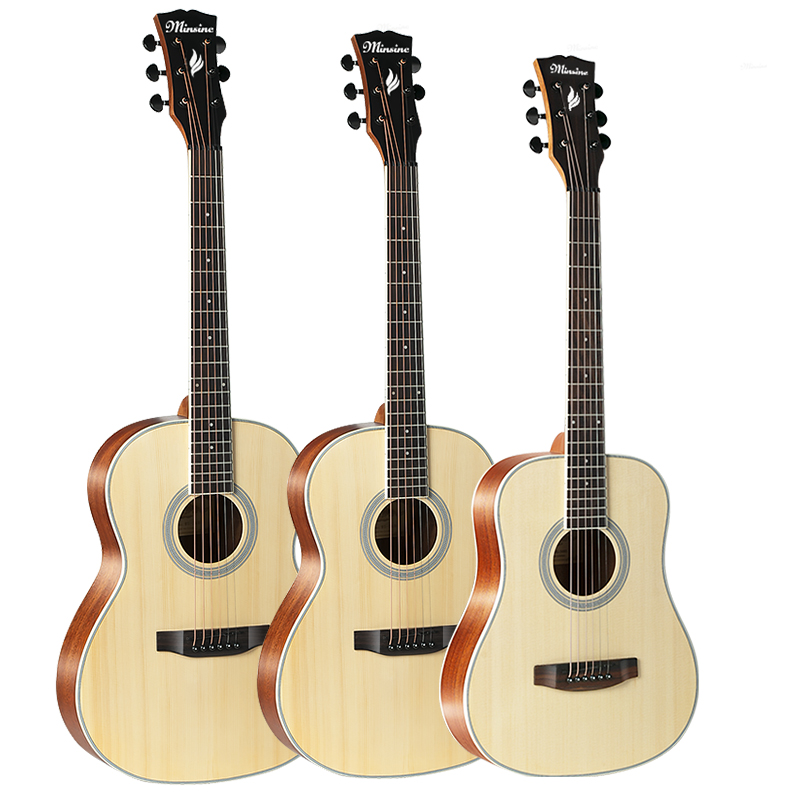
Solid Top Engelmann Cutaway Selected Solid Engelmann Spruce Top / Sapele Back & Sides / Rosewood Fretboard Velvety overtone warmth, high dynamic touch response, balanced mid-frequency voice. Tenjin boutique showrooms, recording studios, live acoustic clubs, fingerstyle artists.
Institutional Laminate Dreadnought Resonance-Optimized Spruce Laminate / Mahogany Body / High-Density Technical Bridge Immunity to erratic atmospheric humidity shifts, robust structural projection, uniform stability. Kyushu university club associations, municipal school music curricula, entry-tier retail racks.
Compact Travel / Parlor Form Factor 34" - 36" Scaled Chamber / Chinaberry & Poplar / Thin-Profile Satin Neck Focused midrange articulation, portable dimensions, minimal body footprint. Urban Fukuoka apartment practice, busking corridors in Nakasu, youth instruction suites.
Active Stage Electro-Acoustic Solid Top / Undersaddle Piezo + Preamp EQ / Ergonomic Scalloped X-Bracing High feedback resistance on acoustic stages, transparent line-out impedance calibration. Regional music festival staging, house of worship venues, professional touring setups.
Industry Horizon

Macro Trends Transforming Kyushu Music Merchandising

Addressing structural shifts across Japanese instrument procurement: compact formats, private labeling, and localized inventory velocity.

1. Shift Toward Direct-to-Factory Private Labeling (OEM/ODM): Japanese musical instrument importers have historically relied on domestic wholesale trading intermediaries (shosha), yielding inflated distribution margins. Progressive Fukuoka retail enterprises and regional chain retailers are aggressively pivoting toward factory-direct contracts. By pairing our automated CNC carving matrices with custom headstock logos, laser inlays, and tailored carton designs, retailers secure gross margin improvements exceeding 38% while controlling their distinctive brand narrative.
2. Strict Environmental and Wood Import Verification: With enforcement protocols surrounding timber sustainability intensifying across Japanese customs, raw timber chain-of-custody documentation is mandatory. Our factory guarantees full traceable legitimacy across rosewood variants, spruce harvests, and alternative fingerboard tonewoods, providing frictionless clearance documentation through Hakata Customs inspection authorities.
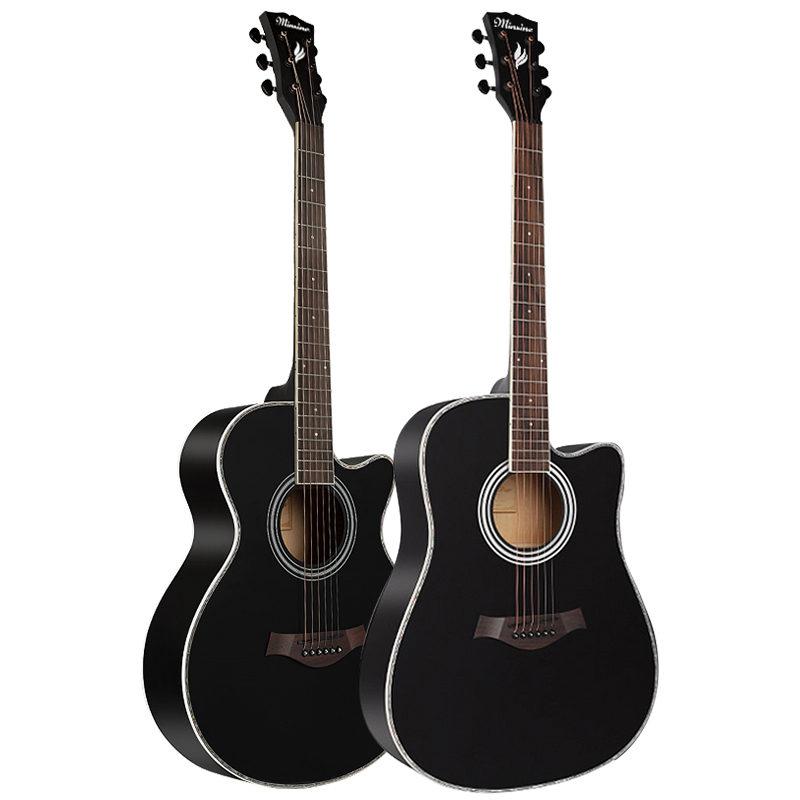
3. The Urban Living Constraint and Ergonomic Miniaturization: Compact residential footprint in dense metropolitan nodes like Hakata-ku and Chuo-ku has spurred significant sales spikes in 34-inch and 36-inch folk/cutaway bodies. These models, exemplified by our Minsine MS-36 series, deliver rich acoustic resonance without imposing excessive acoustic SPL or requiring unwieldy storage overhead, making them premier inventory targets for regional dealers.
Buyer Knowledge Base

Frequently Addressed Questions by Fukuoka Importers

Transparent engineering, commercial compliance, and logistical clarifications for corporate procurement teams.

What specific freight routing is utilized for maritime delivery into Fukuoka?
Cargo shipments originate from our Changsha export facility and route through major central maritime hubs (Ningbo or Shanghai), connecting on regular feeder rotations directly discharging at the Island City or Kashii Container Terminals at the Port of Hakata (Fukuoka). Transit times average between 4 to 7 sailing days, ensuring the lowest landed freight expense and fastest turn-around times relative to standard European or Transpacific trade routes.
How does your factory ensure timber stability during severe Japanese seasonal shifts?
All body blanks, top spruce plates, and neck timbers pass through high-frequency vacuum kilning to stabilize wood cells and homogenize moisture content at 8-10%. Following mechanical CNC routing, components rest in humidity-stabilized acclimation chambers before lacquering, eliminating the internal structural tension that typically leads to neck warpage, top buckling, or fret sprout in Kyushu's summer humidity and winter dryness.
What are the minimum order quantities (MOQ) for custom brand headstocks and ODM projects?
For initial sample validations, single custom instrument builds can be dispatched for structural evaluation. Standard OEM production runs incorporating customized silk-screened or pearl-inlaid headstock badges, custom tone wood blends, branded hardware etching, and custom packaging generally begin at 50 to 100 units per specification model, enabling boutique Japanese retailers to introduce proprietary brand offerings without incurring prohibitive inventory carrying debt.
What payment terms and transaction methods do you extend to Japanese corporate buyers?
We accommodate multiple flexible transaction structures, including telegraphic transfers (T/T), confirmed irrevocable Letters of Credit (L/C) at sight for container loads, alongside standard commercial payment vehicles. Quotations can be executed under FOB, CIF (Port of Hakata), or DDP terms, with multi-currency settlement capabilities including JPY, USD, and EUR to insulate buyers against foreign exchange volatility.
Are replacement components and defect compensations guaranteed?
Yes. Every instrument undergoes a multi-point inspection protocol covering neck angle alignment, fret dressing, bridge gluing shear-strength, lacquer integrity, and intonation. In the rare event of transit damage or structural manufacturing non-conformity verified by your incoming QC team, replacement components or credit allowances are immediately applied to downstream manifests under our comprehensive B2B supplier warranty framework.
Enterprise Manufacturing Superiority

Why Leading Global & Japanese Brands Partner With YBUL

Combining industrial scale with artisanal lutherie precision across our 16,483㎡ manufacturing footprint.

SGS Third-Party Assessed

Our two automated production facilities and centralized Changsha R&D center are audited and accredited onsite by SGS Group, verifying actual manufacturing authenticity rather than trading shell intermediaries.

Modern Automated CNC Lines

Utilizing high-precision multi-axis CNC routers, industrial wide-belt sanders, and closed-loop electrostatic spray booths to maintain micro-millimeter tolerance repeatability across all guitar necks and soundboards.

Rapid 99.87% Export SLA

Our dedicated Japanese regional trade desk maintains immediate cross-border inquiry turnaround, providing rapid CAD rendering updates, transparent pre-production wood sampling, and synchronized freight trackability.
Establish Your Acoustic Guitar Manufacturing Line Today

Consult with our instrument engineering team to review technical drawings, wood samples, and volume tier pricing for your Fukuoka distribution network or retail venture.

Contact Us